
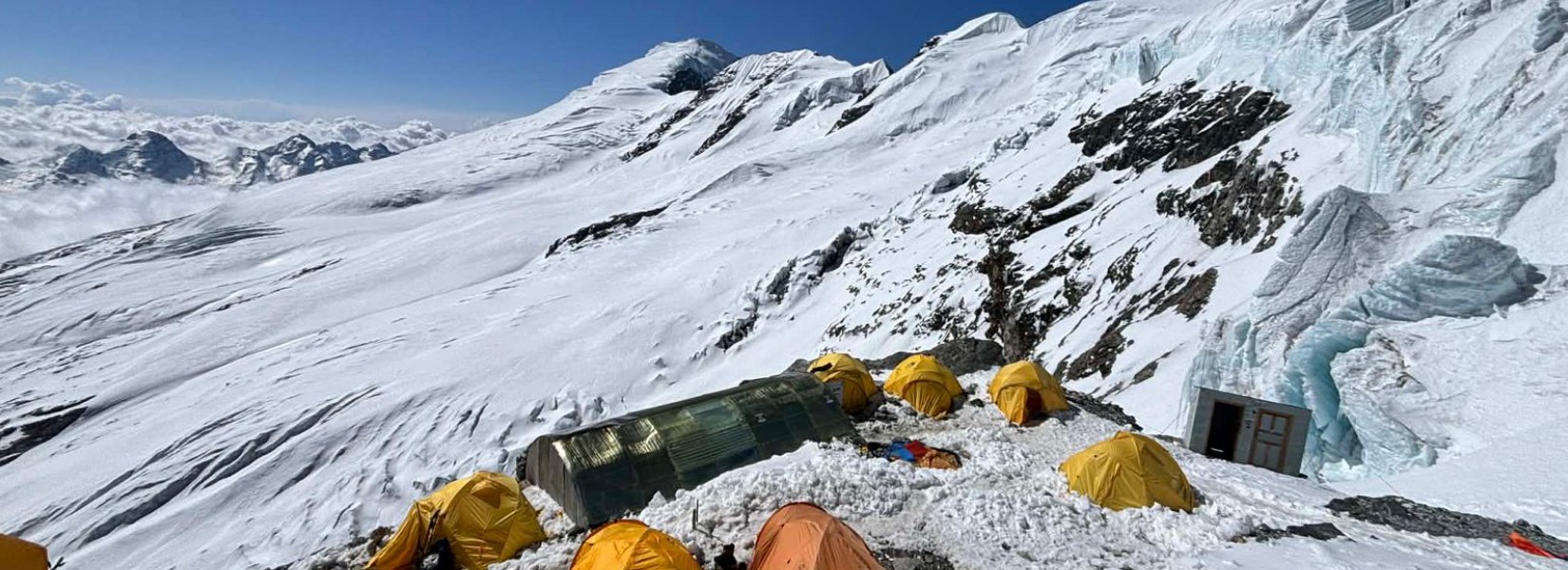
Mera Peak is one of the best entry points into Himalayan mountaineering. Standing at around 6,476 meters, it is widely known as Nepal’s highest trekking peak, although the Nepal Mountaineering Association lists Mera Peak at 6,470 meters. Either way, it is a serious high-altitude adventure and a major step above a normal trekking holiday.
Table of Contents
Plan your trip to Nepal
Customize your trip with help from a local travel specialist.
Mera Peak (6,476m / 21,247ft) is Nepal's highest official trekking peak and one of the most rewarding Himalayan summits accessible to fit, determined trekkers without prior technical mountaineering experience. From its snow-capped summit, climbers stand face-to-face with five of the world's six highest peaks — Everest (8,848m), Cho Oyu (8,201m), Lhotse (8,516m), Makalu (8,485m), and Kanchenjunga (8,586m) — in a single, unforgettable panorama.
This complete guide answers every question first-time and returning climbers ask about Mera Peak: how hard it really is, what it costs, when to go, what permits you need, how to train, what to pack, how it compares to Island Peak and Lobuche East, and the day-by-day itinerary that gives you the highest chance of standing on top. Whether you're researching your first 6,000-metre climb or finalising plans for next season, this is the only resource you'll need.
Mera Peak at a Glance
| Attribute | Details |
| Elevation | 6476 meters (21,247 ft) |
| Location | Mahalangur Section, Hinku Valley, Solukhumbu, Nepal |
| First Ascent | 20 May 1953 by Col. Jimmy Roberts and Sen Tenzing |
| Classification | Trekking Peak (NMA — Group B) |
| Technical Grade | Alpine PD (Peu Difficile) — moderately easy |
| Climbing Duration | 16 to 20 days from Kathmandu |
| Best Seasons | March–May (spring) and September–November (autumn) |
| Starting Point | Lukla (2,860m) — flight from Kathmandu/Ramechhap |
| Highest Camp | Mera High Camp (5,800m) |
| Summit Success Rate | Approximately 75–85% with proper acclimatisation |
| Permits Required | NMA Climbing Permit, Makalu Barun NP, Khumbu Pasang Lhamu Rural Municipality |
| Average Cost | USD 2,200 – USD 4,500 per person (group basis) |
| Recommended Group Size | 2–12 climbers per guide team |
| Fitness Level | High — comparable to a hard multi-day trek with summit day |
What is Mera Peak?
Mera Peak is the highest peak officially classified as a 'trekking peak' by the Nepal Mountaineering Association (NMA). Standing at 6,476 metres (21,247 feet) in the remote Hinku Valley east of the Everest region, it is one of the few Himalayan summits above 6,400m that strong trekkers can climb without prior technical mountaineering experience. The mountain has three main summits — Mera North (6,476m), Mera Central (6,461m), and Mera South (6,065m) — though the standard climbing route targets Mera North, the true summit.
Mera Peak was first climbed on 20 May 1953 by Colonel Jimmy Roberts and Sherpa Sen Tenzing, just nine days before Tenzing Norgay and Edmund Hillary stood on Everest. Since then, Mera has earned a reputation as the perfect introduction to high-altitude Himalayan climbing: high enough to feel like a serious mountaineering objective, accessible enough that fit trekkers can summit with two or three days of basic training on the mountain.
Why Climb Mera Peak?
Mera Peak attracts more international climbers each year than almost any other Nepalese trekking peak, and for good reason:
- Five 8,000m peaks visible from the summit — Everest, Lhotse, Makalu, Cho Oyu, and Kanchenjunga in a single panoramic sweep, a view no other trekking peak in Nepal can match.
- No prior climbing experience required — basic crampon, ice axe, and rope skills are taught on the mountain by your guide team.
- Genuine 6,000-metre summit — at 6,476m, Mera is a serious altitude achievement and an excellent stepping stone toward Island Peak, Lobuche East, or an eventual 7,000-metre or expedition objective.
- Off-the-beaten-path trekking — the Hinku Valley approach passes through rhododendron forests, remote Sherpa villages, and high pastures rarely seen by Everest Base Camp trekkers.
- High summit success rate — with a properly designed itinerary (16–18 days), success rates exceed 80% for healthy, prepared climbers.
- Lower cost than expedition peaks — a fraction of the cost of permitted peaks above 7,000m, with comparable scenery and a comparable sense of achievement.
Location & Geography
Mera Peak lies in the Mahalangur Himal section of the Nepalese Himalaya, in the Solukhumbu District of Province No. 1. It sits south of the main Khumbu (Everest) region and is separated from it by the Hinku and Hongu valleys. Administratively, the climb falls within the Makalu Barun National Park and the Khumbu Pasang Lhamu Rural Municipality, which is why climbers pay entry fees for both.
The standard approach begins with a 30-minute flight from Kathmandu (or Ramechhap during peak season) to Lukla, then turns south rather than north — away from the Everest Base Camp trail — and climbs over the Zatrwa La pass (4,610m) into the Hinku Valley. The trail then follows the Hinku Khola upstream through Tashing Dingma, Kothe, Thaknak, and Khare to the base of the peak.
How Difficult is Mera Peak? A Realistic Assessment
This is the question every prospective climber asks first, and the honest answer is: Mera Peak is technically straightforward but physically demanding. Understanding the distinction is critical to your preparation and your summit chances.
Technical Difficulty
Mera Peak is graded Alpine PD (Peu Difficile — 'a little difficult') on the international climbing scale. In practical terms this means:
- No vertical ice or rock climbing on the standard route — the entire climb from base camp to summit is on snow and glacier.
- Slopes average 30–40 degrees, with one short steeper section (40–45 degrees) just below the summit ridge.
- Crevasse hazard exists between High Camp and the summit — climbers move roped together on a fixed line, managed by guides.
- A 30–50 metre fixed rope is in place on the final summit headwall during the climbing season; climbers ascend using a jumar (ascender) and descend by abseil or arm-rappel.
- Basic skills needed: walking in crampons, self-arrest with an ice axe, ascending a fixed rope with a jumar, abseiling. All are taught at Khare (5,045m) over one to two training days.
Physical Difficulty
The physical demands of Mera Peak are what catch most climbers off guard. The summit day is one of the longest single days on any trekking peak in Nepal:
- Summit day: 10–14 hours of continuous effort, departing High Camp around 1:00–2:00 AM and returning to Khare the same evening.
- Cumulative ascent over 16 days exceeds 6,000 vertical metres, with most days involving 5–8 hours of walking.
- Altitude effects begin around 3,500m and intensify significantly above 5,000m, where oxygen levels are roughly half that at sea level.
- Summit ridge altitude (6,476m) means each step takes 2–3 breaths; climbers describe the final 100 metres as the hardest physical effort of their lives.
- Cold exposure: summit day temperatures range from -20°C to -30°C with wind chill, requiring full down expedition gear.
Who Should Attempt Mera Peak?
Mera Peak is appropriate for climbers who: have completed at least one high-altitude trek above 5,000m (Everest Base Camp, Annapurna Circuit Thorong La, Kilimanjaro); can comfortably hike 6–8 hours per day with a 7–10 kg daypack for two weeks consecutively; are willing to undergo basic training in crampon and rope technique; have no underlying cardiovascular or respiratory conditions; and are mentally prepared for cold, fatigue, and discomfort during the summit push.
Best Time to Climb Mera Peak
Mera Peak has two well-defined climbing seasons, each with distinct advantages. Choosing the right season can be the difference between a successful summit and turning back.
Spring Season (March, April, May)
Spring is the most popular season for Mera Peak. Temperatures are gradually rising, days are getting longer, and the snow conditions on the upper mountain are generally stable. April is the peak month, with rhododendron forests in full bloom along the Hinku Valley approach. Expect summit-day temperatures of -15°C to -25°C and good visibility 70–80% of the time. Crowds peak in April; book accommodation in Khare well in advance.
Autumn Season (September, October, November)
Autumn delivers the clearest skies of the year. Post-monsoon air is washed clean and visibility from the summit can extend over 200 km on a clear day. October is the prime month — stable weather, dry trails, and moderate temperatures. By late November, summit-day temperatures drop to -25°C to -30°C and shorter days make the push significantly harder. Autumn is preferred by photographers and those prioritising views.
Why Not Winter or Monsoon?
Winter (December–February) climbs are possible but punishing: summit-day temperatures below -35°C, frequent high winds, deep snow, and short daylight reduce success rates to under 30%. Monsoon (June–August) brings heavy rain in the lower valleys, dangerous flight cancellations to Lukla, hidden crevasses under fresh snow, and very poor visibility. Neither season is recommended for any but the most experienced alpinists.
17 Days Mera Peak Climbing Detailed Itinerary
This itinerary is the gold-standard plan used by most reputable Nepalese operators. It builds in two genuine acclimatisation days, a training day at Khare, and a contingency summit day — the single most important factor in summit success.
| Day | Route | Description |
| Day 1 | Arrival in Kathmandu (1,400m) | Airport transfer, hotel check-in, trip briefing with guide. Overnight at hotel. |
| Day 2 | Kathmandu — preparation & permit day | Final gear check, permit processing at NMA, sightseeing at Boudhanath or Pashupatinath if time allows. Overnight at hotel. |
| Day 3 | Fly Kathmandu to Lukla (2,860m), trek to Chutanga (3,050m) | 30-minute mountain flight to Lukla. After breakfast, begin the trek heading south toward the Kalo Himal Ridge. 3–4 hour walk. Overnight at teahouse. |
| Day 4 | Acclimatisation day at Chutanga | Short hike to 3,500m and return. Active rest helps the body begin adapting. Overnight at teahouse. |
| Day 5 | Chutanga to Thuli Kharka (4,300m) via Zatrwa La (4,610m) | First major pass crossing. 6–7 hour day with 1,500m of ascent and descent. Spectacular views of Mera and Kongdi Ri. Overnight at teahouse. |
| Day 6 | Thuli Kharka to Kothe (3,600m) | Descend through rhododendron and pine forest into the Hinku Valley. 5–6 hour day, mostly downhill. Overnight at teahouse. |
| Day 7 | Kothe to Thaknak (4,358m) | Trek north along the west bank of the Hinku Khola. Pass the sacred Lungsumgba Gompa. 4–5 hours. Overnight at teahouse. |
| Day 8 | Thaknak to Khare (5,045m) | Short but steep day climbing onto the moraine of the Dig Glacier. First views of Mera Peak's north face. 3–4 hours. Overnight at teahouse. |
| Day 9 | Acclimatisation & training day at Khare | Critical day. Hike to 5,300m for acclimatisation. Afternoon training session with guides on fixed-rope technique, crampons, ice axe arrest, and jumar use. Overnight at teahouse. |
| Day 10 | Khare to Mera Base Camp (5,300m) | Short trek to the foot of the Mera Glacier. Practice crampon walking on the glacier. 2–3 hours. Overnight in tents. |
| Day 11 | Mera Base Camp to Mera High Camp (5,800m) | Roped glacier travel across the Mera La pass to High Camp on a spectacular rocky outcrop. 4–5 hours. Early dinner, early sleep. Overnight in tents. |
| Day 12 | Summit Day — High Camp to Mera Peak Summit (6,476m), descend to Khare (5,045m) | Wake 1:00 AM, depart 2:00 AM by headlamp. 5–7 hours to summit on roped glacier. 30–50m fixed rope on the final headwall. 30 minutes on summit for photos. Descend to High Camp, pack, continue to Khare. Total day: 10–14 hours. Overnight at teahouse. |
| Day 13 | Contingency / reserve summit day | Built-in buffer if Day 12 weather is poor. If summit was successful on Day 12, this day is used to rest at Khare or descend early to Kothe. |
| Day 14 | Khare to Kothe (3,600m) | Long descent retracing the Hinku Valley. 6–7 hours. Overnight at teahouse. |
| Day 15 | Kothe to Thuli Kharka (4,300m) | Re-ascent toward Zatrwa La. 5–6 hours. Overnight at teahouse. |
| Day 16 | Thuli Kharka to Lukla (2,860m) via Zatrwa La | Final pass crossing and descent to Lukla. 7–8 hours. Celebration dinner. Overnight at teahouse. |
| Day 17 | Fly Lukla to Kathmandu | Early morning flight (weather dependent). Free afternoon for shopping and rest. Farewell dinner. Overnight at hotel. |
Mera Peak Route Options
Three main approach routes lead to Mera Peak. Each has different acclimatisation profiles, scenery, and logistical requirements.
Standard Route via Zatrwa La Pass (Most Popular)
This is the route described in the itinerary above and the choice for roughly 80% of Mera climbers. It starts in Lukla, crosses the Zatrwa La (4,610m) on Day 5, drops into the Hinku Valley, and approaches the peak from the north-west via Khare and the Mera La. Advantages: shortest overall duration (16–18 days), well-established teahouses, classic Hinku Valley scenery. Disadvantage: the rapid altitude gain on Day 5 over Zatrwa La is the toughest acclimatisation challenge of the trip.
Hinku Valley Approach via Pangkongma (Longer, Easier Acclimatisation)
An alternative route avoids the Zatrwa La by trekking south from Lukla through Pangkongma, Naulekh, and Chalem Kharka before joining the Hinku Valley at Kothe. This adds 3–4 days to the itinerary but provides a much gentler altitude profile and passes through villages rarely visited by foreign trekkers. Recommended for climbers concerned about altitude or seeking a more cultural experience. Total duration: 20–22 days.
Mera Peak + Amphu Lapcha + Island Peak Combined Expedition
For experienced climbers, the Mera–Amphu Lapcha–Island Peak traverse is one of the great Himalayan adventures. After summiting Mera, climbers cross the technical Amphu Lapcha pass (5,845m) — a serious mountaineering objective requiring full alpine technique — into the Imja Valley, then climb Island Peak (6,189m) before exiting via Everest Base Camp. Duration: 24–28 days. Cost: USD 5,500–8,000. Not for first-time climbers.
Permits Required for Mera Peak
Mera Peak climbers must obtain three separate permits. Your trekking operator handles the paperwork, but it's important to understand what you're paying for and what each permit covers.
| Permit | Issued by | Cost (Per Person) |
| NMA Mera Peak Climbing Permit (Spring: Mar–May) | Nepal Mountaineering Association | USD 250 |
| NMA Mera Peak Climbing Permit (Autumn: Sep–Nov) | Nepal Mountaineering Association | USD 125 |
| NMA Mera Peak Climbing Permit (Winter/Summer) | Nepal Mountaineering Association | USD 70 |
| Makalu Barun National Park Entry | Department of National Parks | NPR 3,000 (~USD 25) |
| Khumbu Pasang Lhamu Rural Municipality Entry | Local government, Lukla | NPR 2,000 (~USD 17) |
Important: as of recent NMA regulations, Mera Peak (like all Nepalese peaks over 6,000m) cannot be climbed solo or independently — a licensed Nepalese trekking agency must process the permit and a registered climbing guide must accompany the team. Liaison officers are not required for Mera (unlike expedition peaks above 7,000m).
What's Included in a Standard Package
- Airport pickup and drop-off in Kathmandu
- 3 nights' hotel in Kathmandu (twin-share, BB basis)
- Round-trip flight Kathmandu–Lukla–Kathmandu (or Ramechhap–Lukla in peak season)
- All three permits (NMA climbing permit, MBNP entry, KPLRM entry)
- Licensed climbing guide and assistant guides (ratio 1:2 or better)
- Porters (1 porter per 2 climbers, max 25 kg per porter load)
- All teahouse accommodation during the trek (twin-share)
- Tented camp at Mera Base Camp and High Camp
- Three meals a day during the trek (breakfast, lunch, dinner)
- Group climbing equipment (ropes, ice screws, snow bars, tents, cooking gear)
- Garbage deposit and waste management
- Government taxes and operator service charges
What's NOT Included (Budget Separately)
- International airfare to and from Kathmandu
- Nepal entry visa (USD 30 for 15 days, USD 50 for 30 days, USD 125 for 90 days)
- Personal climbing equipment hire (boots, crampons, harness, ice axe) — approx. USD 250–400 for the trip
- Travel and high-altitude rescue insurance covering up to 6,500m (mandatory — USD 150–300)
- Personal expenses: snacks, bottled drinks, hot showers, charging, Wi-Fi (budget USD 200–400)
- Tips for guide, assistant guides, and porters (industry standard: USD 250–400 per climber for the full team)
- Lunch and dinner in Kathmandu
- Emergency helicopter evacuation (covered by insurance, but you pay first and claim back)
- Mera summit success bonus for guides (optional, USD 100–200)
Hidden Costs Climbers Often Forget
First-time climbers consistently underestimate the personal cost layer of a Mera expedition. Hot showers in Khare cost USD 5–7 each. Charging a phone or camera battery costs USD 3–5 per device per night above 4,000m. Wi-Fi in upper villages runs USD 4–8 per hour. A 1.5-litre bottle of mineral water at Khare is USD 4 (compared to USD 0.30 in Kathmandu). Realistically budget USD 25–35 per day for personal extras across the trek.
Complete Gear & Equipment Checklist
Mera Peak requires a serious gear list combining trekking equipment for the approach and full mountaineering equipment for the upper mountain. Below is a category-by-category checklist used by experienced operators. Items marked (H) can be hired in Kathmandu for USD 1–5 per day per item.
Technical Climbing Equipment
- Mountaineering boots, double-layer, rated to -30°C (e.g., La Sportiva G2 Evo, Scarpa Phantom 6000) (H)
- Crampons, 12-point, with anti-balling plates, compatible with your boots (H)
- Ice axe, general mountaineering type, 60–70 cm (H)
- Climbing harness with adjustable leg loops (H)
- Climbing helmet (H)
- Ascender / jumar, right- or left-handed (H)
- Belay device (ATC or figure-8) with locking carabiner (H)
- 2 × locking carabiners (HMS pear-shaped preferred)
- 2 × non-locking carabiners
- 120 cm sewn sling and 60 cm sewn sling
- Prusik cord, 5mm × 1.5m
- Trekking poles, telescopic, with snow baskets
Clothing — Upper Body
- Down expedition jacket, 800+ fill power, rated to -30°C (H)
- Synthetic insulated jacket (mid-layer for active climbing)
- Soft-shell jacket (windproof, breathable)
- Hard-shell waterproof jacket with hood (Gore-Tex or equivalent)
- 2 × thermal base-layer tops (merino wool or synthetic, NOT cotton)
- 2 × long-sleeve trekking shirts
- 1 × short-sleeve trekking shirt
Clothing — Lower Body
- Down or synthetic insulated trousers for summit day (H)
- Soft-shell trekking trousers
- Hard-shell waterproof trousers (full-zip preferred)
- 2 × thermal base-layer leggings
- Trekking shorts (optional, for lower altitudes)
- 4–5 × moisture-wicking underwear
Hands, Head & Feet
- Expedition mitts or heavy down mittens for summit day (H)
- Insulated climbing gloves (mid-weight)
- Light glove liners (silk or merino)
- Warm beanie covering ears
- Buff or balaclava
- Wide-brim sun hat or cap with neck flap
- Glacier sunglasses, Category 4 lenses (essential — UV at 6,000m is extreme)
- Ski goggles for summit day in wind
- 4–5 × thick wool/synthetic mountaineering socks
- 3 × liner socks
- Sturdy trekking boots (waterproof, broken-in) for approach
- Camp shoes or sandals (Crocs, light trainers) for teahouse evenings
- Gaiters
Sleeping & Carrying
- Sleeping bag rated to -25°C comfort (-30°C for autumn) (H)
- Sleeping bag liner (adds 5°C of warmth)
- Inflatable sleeping pad (NeoAir XTherm or similar) for high camp
- Duffel bag, 90–120 litre, for porter (lockable)
- Climbing/trekking backpack, 45–55 litre, with hip belt
- Dry bags or stuff sacks for organising gear
Personal & Miscellaneous
- Headlamp with spare batteries (Petzl Actik or similar, 350+ lumens)
- Water bottles (2 × 1L Nalgene-style, insulated) — bladders freeze at altitude
- Thermos flask, 1L, for hot drinks on summit day
- Water purification: tablets or SteriPEN
- Personal first-aid kit (see medical section below)
- High-SPF sunscreen (SPF 50+) and SPF lip balm
- Quick-dry towel
- Wet wipes, toilet paper, hand sanitiser
- Earplugs and eye mask
- Power bank (20,000 mAh) and charging cables
- Camera with spare batteries (kept warm)
- Energy bars, gels, snacks for summit day (1,500–2,000 kcal)
- Personal documents: passport, 4 passport photos, insurance certificate, permits
Training & Physical Preparation
Your summit chance is decided in the four to six months before you fly to Nepal, not on the mountain. A structured training programme that builds aerobic endurance, leg strength, and altitude tolerance is the single biggest investment you can make in your climb.
6-Month Training Plan Overview
| Phase | Weeks | Focus | Key Sessions per Week |
| Base Building | Weeks 1–8 | Aerobic foundation | 3× zone-2 cardio (45–60 min), 2× strength (full body), 1× long hike (3–4 hrs) |
| Build | Weeks 9–16 | Strength + endurance | 3× cardio (60–90 min, mix of zone-2 and intervals), 2× leg-focused strength, 1× long weighted hike (5–6 hrs, 10 kg pack) |
| Peak | Weeks 17–22 | Specificity | 3× cardio (incl. 1 long), 2× strength, 2× back-to-back weighted hikes per weekend (7–8 hrs, 12–15 kg pack) |
| Taper | Weeks 23–24 | Recovery | Reduce volume 40%, maintain intensity, rest 3 days before flight |
Key Training Principles
- Time on feet beats gym sessions. Long weekend hikes with a weighted pack are the most specific preparation.
- Hill training is non-negotiable. Find the steepest sustained climb near you and repeat it weekly.
- Stair-climbing machine or steep treadmill incline (15%+) is the best indoor substitute.
- Leg strength — focus on single-leg work (Bulgarian split squats, step-ups, lunges) which mirrors trail movement.
- Core strength supports a loaded pack — plank variations, dead bugs, and bird-dogs 3× per week.
- If possible, complete one altitude exposure trek above 4,500m within 6 months of your Mera climb.
Altitude Sickness, Acclimatisation & Safety
Mera Peak's summit at 6,476m places climbers at less than 50% of the oxygen partial pressure available at sea level. Altitude-related illness — Acute Mountain Sickness (AMS), High-Altitude Pulmonary Edema (HAPE), and High-Altitude Cerebral Edema (HACE) — is the most serious risk on the mountain and the leading cause of climbers turning back.
Recognising Acute Mountain Sickness (AMS)
AMS typically begins above 2,500m and intensifies with altitude. Mild AMS affects 40–60% of climbers above 4,000m on a properly paced itinerary. Common symptoms include headache, nausea, loss of appetite, fatigue beyond what the day's effort warrants, disturbed sleep, and dizziness. Mild AMS is manageable with rest, hydration, and ibuprofen or paracetamol. The golden rule: if symptoms are not improving after 24 hours of rest at the same altitude, descend.
HAPE & HACE — Life-Threatening Emergencies
HAPE (fluid in the lungs) presents as severe shortness of breath at rest, gurgling breathing, persistent dry cough progressing to pink/frothy sputum, and severe fatigue. HACE (brain swelling) presents as confusion, loss of coordination (ataxia — inability to walk a straight line), severe headache unresponsive to medication, and altered consciousness. Either condition requires immediate descent of at least 500–1,000 metres and emergency helicopter evacuation. Dexamethasone for HACE and nifedipine for HAPE are standard emergency medications carried by qualified climbing guides.
Acclimatisation Strategies That Actually Work
- Climb high, sleep low — the principle of the acclimatisation hikes built into the itinerary at Chutanga and Khare.
- Ascend slowly — never gain more than 500m of sleeping altitude per day above 3,000m, and take a rest day for every 1,000m gained.
- Hydrate aggressively — 3.5 to 4.5 litres of water per day above 4,000m. Dark urine is a warning sign.
- Eat carbohydrate-heavy meals — your body needs 25% more calories at altitude, and digesting fat is harder.
- Avoid alcohol and sleeping pills (other than altitude-prescribed Diamox) — both depress breathing.
- Consider Diamox (acetazolamide) prophylactically — 125mg twice daily starting 24 hours before reaching 3,500m, continued to High Camp. Consult your doctor before the trip.
- Communicate symptoms early — guides cannot help if you hide how you feel. Honesty about AMS is the most experienced thing you can do on the mountain.
Travel & Rescue Insurance — Non-Negotiable
Insurance covering trekking AND mountaineering up to 6,500 metres is mandatory for Mera Peak. A standard travel policy almost never includes this. Reputable specialist providers include Global Rescue, IHI Bupa, World Nomads (Explorer Plan with high-altitude add-on), Austrian Alpine Club (UK Section), and BMC Travel (Alpine and Ski). A helicopter rescue from Mera Base Camp costs USD 4,500–8,000; from above Khare, USD 6,000–12,000. Always carry a printed copy of your policy with the emergency contact number and policy number.
Accommodation & Food During the Climb
Mera Peak is a mixed teahouse-and-tent climb. From Lukla to Khare, climbers sleep in teahouses (Nepali-style mountain lodges); from Mera Base Camp upward, accommodation is in tents.
Teahouses on the Hinku Valley Route
Teahouses on the Mera trail are simpler than those on the Everest Base Camp route — the Hinku Valley sees a fraction of the trekker traffic. Expect a small wooden room with two single beds, foam mattresses, blankets (bring your own sleeping bag), and shared squat-toilet facilities. Khare, the launching village for the climb, has the best lodges on the route, including the Royal Mera Hotel and Mera Peak Hotel with attached bathrooms in some rooms. Power for charging is solar-powered and unreliable above Kothe — bring a fully-charged 20,000 mAh power bank.
Tented Camps Above Khare
Mera Base Camp (5,300m) and High Camp (5,800m) are tented camps set up by your operator. Sleeping tents are two-person mountaineering tents (e.g., Mountain Hardwear Trango, North Face VE-25). Climbers eat in a heated dining tent at base camp; at high camp, meals are taken in a smaller cook tent or in your sleeping tent. Toilet tents are provided. Cleanliness and quality of camp varies enormously between operators — this is where premium packages justify their higher cost.
Food on the Mountain
Below Khare, food is teahouse menu: dal bhat (lentils and rice, the national dish and unlimited refills), noodle soups, fried rice, pasta, momos, pancakes, eggs, porridge, and chapati. Vegetarian options are plentiful and recommended — meat above 3,500m is rarely fresh and risks food poisoning at the worst possible time. Above Khare, your cook team prepares simpler, energy-dense meals: porridge, eggs, pasta, soups, and plenty of tea. Hot drinks (tea, hot lemon, hot chocolate) are unlimited and essential for hydration and warmth.
Guides, Porters & Sherpa Support
Your climbing team is the single most important factor in your safety and your summit success — more important than your gear, your fitness, or even the weather. Understanding the roles helps you ask the right questions when choosing an operator.
Climbing Guide (Sirdar)
Your climbing guide must hold a current NMA Climbing Guide Licence. Look for guides with: a minimum 5 years of high-altitude experience, at least 10 Mera Peak summits, current Wilderness First Responder (WFR) certification, and ideally additional 7,000m or 8,000m peak experience. The lead guide is responsible for route-finding, weather decisions, summit-day go/no-go calls, fixed-rope management, and emergency response.
Assistant Climbing Guides
On the summit push, the ratio of climbers to climbing staff should be no greater than 2:1. For a group of 6 climbers, expect 1 lead guide + 2 assistant climbing guides. Ratios worse than 3:1 should be a red flag — on a steep, roped climb at 6,400m, one guide cannot effectively manage more than 2 clients in trouble.
Porters
Porters carry the team's group equipment and personal duffel bags. The Nepalese government legal load limit is 25 kg per porter — reputable operators stick to this. Each porter typically carries the gear of 2 climbers (max 12 kg of personal gear per climber in the duffel). Porters do not climb above Khare; from Base Camp upward, climbing staff and climbers carry their own loads. Ethical operators provide porters with proper boots, jackets, sunglasses, and insurance — ask directly before booking.
Tipping Guidelines
Tipping is expected and represents a meaningful portion of mountain workers' income. Industry-standard guidance per climber for a Mera expedition: Lead Climbing Guide — USD 150–200; Assistant Climbing Guide — USD 100–150 each; Porter — USD 60–100 each. Tips are pooled and distributed at the farewell dinner in Kathmandu. A successful summit deserves a bonus of USD 50–100 per guide.
Mera Peak vs Island Peak vs Lobuche East: Which Is Right for You?
These three are the most popular trekking peaks in Nepal and are constantly compared by aspiring climbers. They are very different mountains despite all being NMA-classified trekking peaks.
| Factor | Mera Peak | Island Peak (Imja Tse) | Lobuche East |
| Height | 6,476 m | 6,189 m | 6,119 m |
| Technical Grade | Alpine PD | Alpine PD+ | Alpine PD+ / AD- |
| Technical Difficulty | Mostly snow walking; one 30–50m fixed rope on summit headwall | Steep 100–150m fixed-rope headwall, crevassed glacier traverse | Steep mixed snow/ice, rocky ridge to summit, more sustained technical climbing |
| Physical Difficulty | Highest of the three (10–14 hr summit day, longest altitude exposure) | Moderate (10–12 hr summit day) | Moderate-high (9–11 hr summit day) |
| Best For | Fit trekkers with no climbing background; first 6,000m peak | Climbers wanting more technical challenge; often combined with EBC | Most technically demanding of the three; preparation for 7,000m climbs |
| Typical Duration | 16–20 days | 14–18 days (often with EBC) | 15–18 days (often with EBC) |
| Views from Summit | 5 × 8,000m peaks — most expansive view of any trekking peak | Everest, Lhotse, Nuptse, Ama Dablam — closer but narrower | Everest, Nuptse, Cholatse, Pumori — dramatic and intimate |
| Approach Trail Crowds | Light (Hinku Valley) | Heavy (overlaps with EBC trail) | Heavy (overlaps with EBC trail) |
| Cost (USD, group) | $2,200 – $4,500 | $2,000 – $3,800 (incl. EBC) | $2,500 – $4,200 (incl. EBC) |
| Summit Success Rate | 75–85% | 65–80% | 60–75% |
Choose Mera if you want the highest summit and the biggest view with the least technical climbing; choose Island Peak if you want more genuine mountaineering technique with a shorter approach; choose Lobuche East if you're a confident scrambler looking for the most technically demanding of the three as a stepping stone toward expedition peaks.
Cultural Experience Along the Mera Trail
Mera Peak's approach passes through some of the most isolated Sherpa, Rai, and Kulung communities in eastern Nepal. Unlike the Everest Base Camp trail, where tourism has been the dominant economy for two generations, the Hinku Valley retains a more traditional rhythm.
Sherpa Buddhist Heritage
Lungsumgba Gompa, near Thaknak, is a centuries-old Buddhist monastery carved into the rock face above the Hinku Khola. Climbing teams traditionally stop for a brief blessing from the resident lama before continuing toward Khare — a small ritual that many Sherpas regard as essential for safety on the mountain. Prayer flags, mani walls (carved stones), and chortens (stupas) punctuate the entire trail. Walk clockwise around all religious structures.
The Kulung Rai People
The lower Hinku Valley around Pangkongma is home to Kulung Rai communities, an indigenous group with their own language, animist religion (mixed with Hinduism), and distinct architecture. Their stone houses with slate roofs differ noticeably from Sherpa wooden lodges higher up. The Rai are renowned hunters and honey-gatherers; you may pass the famous cliff-hanging beehives that have featured in documentary films.
Festival Considerations
If your trek coincides with major festivals — Dashain (September/October), Tihar (October/November), or Losar (February) — Lukla flights may be reduced and some lodges run by lower-altitude staff may have limited service. Conversely, witnessing Mani Rimdu at Tengboche Monastery (October/November) or the Buddhist festivals at smaller Hinku Valley gompas is an experience few climbers ever forget.
Mera Peak Climbing — Frequently Asked Questions
Is Mera Peak suitable for beginners?
Mera is suitable for fit beginners with no prior technical climbing experience, provided they have previous high-altitude trekking experience (above 5,000m) and have committed to 4–6 months of structured physical preparation. It is NOT suitable for someone whose first ever high-altitude experience is the climb itself — the cumulative altitude exposure over 16 days is more demanding than most first-timers expect.
What is the success rate on Mera Peak?
Reputable operators report summit success rates of 75–85% for fit, well-prepared climbers on a properly paced 16–18 day itinerary. Operators running shorter 12–14 day itineraries report rates of 50–65% — the difference is almost entirely acclimatisation. The leading reasons climbers do not summit are AMS symptoms, summit-day weather, and underestimated fatigue.
Do I need previous climbing experience to climb Mera Peak?
No technical climbing experience is required. Your guides will teach you the necessary skills — walking in crampons, ice axe arrest, ascending fixed ropes with a jumar, and abseiling — during a dedicated training day at Khare (5,045m). You DO need previous trekking experience at altitude (5,000m+) and excellent baseline fitness.
How cold does it get on Mera Peak?
Daytime temperatures at lower elevations (Lukla–Kothe) range from 5°C to 18°C depending on season. At Khare (5,045m), expect 5°C during the day, -10°C at night. At High Camp (5,800m), -15°C is normal. On summit morning, temperatures between -20°C and -30°C with wind chill down to -40°C are common. This is why expedition-grade down clothing is non-negotiable.
How long does it take to climb Mera Peak?
The standard itinerary is 16–18 days from Kathmandu back to Kathmandu, including 2 nights in Kathmandu, 12–14 trekking days, and a summit day with a contingency reserve day. Shorter itineraries exist but significantly reduce summit chances. Longer 20–22 day itineraries via Pangkongma give the best acclimatisation.
What's the best month to climb Mera Peak?
October is widely considered the best single month — clear post-monsoon skies, stable weather, moderate temperatures, and dry trails. April is the best spring month, with warmer temperatures and rhododendron blooms. Avoid late November to February (too cold) and June to early September (monsoon).
Can I climb Mera Peak solo or without a guide?
No. Since 2023, NMA regulations require all foreign climbers on Nepalese peaks to be accompanied by a licensed guide and to obtain permits through a registered Nepalese trekking agency. Solo climbing on Mera is not permitted regardless of your personal experience.
How much does Mera Peak climbing cost?
Costs range from USD 2,200 for budget local operators in a group of 6–8 climbers to USD 6,500 for premium international expedition operators with private service. The realistic mid-range for a quality climb with a reputable Nepalese operator is USD 2,800–3,500 per person, plus USD 400–600 for personal expenses, tips, and gear hire.
What permits do I need for Mera Peak?
Three permits are required: (1) NMA Mera Peak Climbing Permit (USD 250 in spring, USD 125 in autumn, USD 70 winter/summer); (2) Makalu Barun National Park Entry (NPR 3,000 ≈ USD 25); (3) Khumbu Pasang Lhamu Rural Municipality Entry (NPR 2,000 ≈ USD 17). Your operator processes all three.
Is travel insurance mandatory for Mera Peak?
Yes. Reputable operators require proof of insurance covering trekking AND mountaineering up to 6,500 metres including helicopter rescue. A standard travel policy is insufficient — you need a specialist policy from providers like Global Rescue, IHI Bupa, World Nomads Explorer, or Austrian Alpine Club. Expect to pay USD 150–300 for 3 weeks of coverage.
Can I drink tap water on the Mera Peak trek?
No. Tap water and stream water on the trail must be treated. Boiled water is available at teahouses (USD 1–3 per litre). Bottled water is sold up to Khare (USD 2–4 per litre, but creates serious plastic waste). Best practice: bring a SteriPEN or water purification tablets and refill from boiled or filtered sources.
What is the Lukla flight like, and is it safe?
Lukla's Tenzing-Hillary Airport sits at 2,860m on a 527m sloped runway built into a mountainside. The flight from Kathmandu (or from Ramechhap during peak season) takes 30–35 minutes in a small 18-seat aircraft (Twin Otter or Dornier). It is a unique mountain flight that is well within normal safety standards when flown in good visibility, but flights are routinely cancelled or delayed due to cloud cover at either airport. Build a 1–2 day buffer into your trip on both ends.
What happens if Lukla flights are cancelled?
Cancellations are common, especially in the post-monsoon shoulder season. Options include (1) waiting for the weather to clear (most common — flights often run the following day), (2) helicopter charter (USD 500–600 per seat shared, or USD 3,500–4,500 private), or (3) overland travel via Phaplu (long, rough road plus 2-day trek — only used as a last resort). Always have travel insurance covering missed connections.
Will I have mobile signal and Wi-Fi on Mera Peak?
Ncell and Nepal Telecom 4G signal is available in Lukla and intermittently through Chutanga and Kothe. Above Thaknak, signal disappears. Some teahouses in Khare offer Wi-Fi (USD 4–8 per hour, slow). Above Khare there is no connectivity. For emergency use, your guide will carry a satellite phone or InReach device.
What if I get altitude sickness on the climb?
Mild AMS (headache, mild nausea, poor sleep) affects most climbers above 4,000m and is managed with rest, hydration, and ibuprofen. Moderate AMS requires staying at the same altitude until symptoms improve. Severe AMS or any sign of HAPE/HACE requires immediate descent — your guides will make this call without negotiation. Helicopter evacuation is available from Khare and Mera Base Camp.
How heavy is the pack I'll carry?
On approach days (Lukla to Khare), your daypack typically weighs 5–8 kg — water, snacks, layers, camera, sunscreen. Your main duffel (max 12 kg) is carried by a porter. On summit day from High Camp, you'll carry 6–10 kg — water, thermos, extra layers, headlamp, snacks, emergency gear.
What food is available on the Mera Peak trek?
Teahouse menus typically include dal bhat (the staple — lentils, rice, vegetable curry, with free refills), noodle soups (thukpa), fried rice, pasta, momos (dumplings), pancakes, porridge, eggs (boiled, fried, omelette), chapati, soups, and tea. Above Khare, your cook team prepares the food. Stick to vegetarian above 3,500m — meat is rarely fresh.
Do I need oxygen for Mera Peak?
Mera Peak is climbed without supplementary oxygen by virtually all climbers. Reputable operators carry 1 emergency oxygen bottle and a mask/regulator set per team for medical use only. If you have specific concerns, premium operators offer personal oxygen on summit day for an additional fee (USD 500–800).
Can I combine Mera Peak with Everest Base Camp?
Yes — the Mera + Amphu Lapcha + Island Peak + EBC traverse is a classic 24–28 day combined expedition, though Amphu Lapcha (5,845m) is a technical pass that requires genuine mountaineering competence. Easier combinations include Mera Peak followed by a separate Everest Base Camp trek (with a return to Lukla in between) — total 28–32 days, USD 4,500–6,500.
What vaccinations do I need for Nepal?
Routine vaccinations should be up to date (MMR, tetanus, polio). Recommended for Nepal: Hepatitis A and B, Typhoid, and Japanese Encephalitis if travelling outside cities. Rabies pre-exposure is recommended for trekkers. Yellow fever is required only if arriving from a yellow-fever zone. Consult a travel medicine clinic 6–8 weeks before departure.
What is the minimum age for Mera Peak?
Most operators set a minimum age of 18 for independent climbers. Climbers aged 16–17 may be accepted with a parent or guardian on the climb and a doctor's clearance. There is no formal upper age limit — successful Mera summits have been recorded by climbers in their 70s — but climbers over 60 should obtain a comprehensive cardiac and respiratory medical clearance.
Are there toilets on the trail and at high camp?
Teahouses have shared toilet facilities — typically squat toilets, occasionally Western-style. Carry toilet paper and hand sanitiser. At Mera Base Camp and High Camp, your operator sets up a toilet tent with a barrel system. Waste is packed out as part of the team's environmental responsibility under NMA regulations.
What's the difference between Mera North, Mera Central, and Mera South?
Mera Peak has three summits along a snow ridge. Mera North (6,476m) is the true and highest summit — the standard climbing objective. Mera Central (6,461m) is reached more easily and has historically been claimed by some operators as 'the summit' for marketing reasons — always confirm your operator targets Mera North. Mera South (6,065m) is a separate, less-climbed objective.
What gear can I hire in Kathmandu vs. what should I bring?
Buy or bring from home: base layers, trekking trousers, hiking boots, personal medications, sunglasses, headlamp, water bottles, gloves you've broken in, and any item where fit is critical. Hire in Kathmandu (Thamel): double mountaineering boots, crampons, ice axe, harness, helmet, jumar, down expedition jacket, down trousers, sleeping bag rated to -25°C. Hire costs USD 1–5 per item per day; total for a Mera climb USD 250–400.
How fit do I need to be to climb Mera Peak?
You should be able to comfortably hike 6–8 hours per day with a 10 kg pack on consecutive days, climb 1,000 vertical metres in a day without exhaustion, and run 10 km or cycle 40 km in a reasonable time. A practical benchmark: complete a multi-day Alpine hut-to-hut traverse or an EBC trek within 12 months before Mera. Cardiovascular endurance matters more than absolute strength.
Will I lose weight on the Mera climb?
Most climbers lose 3–6 kg over a Mera expedition due to high calorie expenditure (4,500–6,000 kcal per day on trekking days, 8,000+ kcal on summit day) and reduced appetite at altitude. Arrive at a healthy weight with some reserve; do not attempt the climb on a calorie deficit or recent weight-loss diet.
Expert Tips to Maximise Your Summit Chances
- The extra acclimatisation days at Chutanga and Khare are the single biggest factor in summit success — far more important than any gear choice.
- Test every piece of gear before Nepal. Your double boots must be broken in on a real glacier or at least multi-day winter hikes. Brand-new boots on summit day cause blisters that end summit attempts.
- Eat aggressively at altitude even when you don't feel hungry. Loss of appetite is part of AMS — push through it. Hot soup at every dinner is the easiest way to take in calories and fluid simultaneously.
- Drink hot drinks on summit day. Cold water freezes; hot tea in a thermos at 4 AM is the single best morale and warmth boost on the upper mountain.
- Sleep with your boot liners, batteries, water bottle, and contact lens solution in your sleeping bag. Anything that can freeze, will.
- Practice using your jumar at home with gloves on. Fumbling with frozen fingers at 6,300m in the dark is not the time to learn.
- Hire an extra porter for personal comfort. The marginal cost (USD 200–300) is nothing compared to the energy you save by carrying less.
- Ask your operator the climber-to-guide ratio on summit day specifically — not just 'overall'. 2:1 or better is the standard you want.
- Build a 1–2 day weather buffer before your international flight home. Lukla cancellations cause missed connections.
- Take ibuprofen before bed at altitude, not after the headache starts. Pre-emption beats reaction.
Common Mistakes That End Mera Peak Climbs
- Underestimating summit day length. Many climbers turn back not because they couldn't reach the summit, but because they ran out of energy for the return. Train for 12+ hour days, not 6-hour days.
- Skipping the training day at Khare. Two hours of fixed-rope practice is the difference between confidence and panic on the summit headwall.
- Wearing brand-new boots. Painful blisters at 5,800m are unfixable.
- Ignoring early AMS symptoms. Headache and nausea on Day 5 don't disappear by Day 10 — they get worse. Tell your guide on Day 5.
- Carrying too much on summit day. 6–8 kg is plenty. Overpacking is one of the leading causes of summit-day exhaustion.
- Choosing an operator on price alone. The USD 500 you save on a budget operator often correlates with skipped acclimatisation days, poor guide ratios, and inferior camp gear at 5,800m where it matters most.
- Not training specifically for downhills. The descent from summit to Khare is brutal on knees — train downhills with a weighted pack.
- Drinking insufficient water in the cold. You don't feel thirsty at altitude. Set a hydration alarm every hour.
Environmental Responsibility on Mera Peak
The Mera Peak region's fragile high-altitude ecosystem cannot absorb careless tourism. Reputable climbers and operators adhere to a Leave No Trace ethic: all human waste from camps is packed out under the NMA's mandatory waste-management scheme (the USD 500 garbage deposit is refunded only on production of waste at Kathmandu). Reduce single-use plastic by treating your own water rather than buying bottled. Avoid soap and toothpaste in water sources. Walk on established trails to prevent erosion of fragile alpine vegetation. Choose operators with clear, audited environmental practices — ask for their waste management protocol in writing before booking.
Final Thoughts: Is Mera Peak Worth It?
Mera Peak occupies a special place in the spectrum of Himalayan climbing. It is not the easiest trekking peak — Lobuche East and Island Peak both have shorter, less brutal summit days — but it is the highest, with views unmatched by any other accessible summit in Nepal. For the trekker ready to take the next step toward true mountaineering, for the climber wanting a serious 6,000-metre objective without committing to the cost and complexity of a 7,000-metre expedition, and for anyone who has ever stood at Kala Patthar or Gokyo Ri and wondered what it would feel like to stand higher — Mera Peak is the answer.
The summit panorama, with Everest, Lhotse, Makalu, Cho Oyu, and Kanchenjunga arrayed across the horizon at eye level, is the kind of view people travel a lifetime to see. Earning it through 16 days of effort makes the moment unforgettable.
Plan Your Mera Peak Climb with Mount Mania
Mera Peak's spring (March–May) and autumn (September–November) climbing seasons fill up fast — quality operators are typically booked 6–9 months in advance for peak months. To secure your preferred dates and a quality operator with experienced guides, begin your planning at least 9 months before your target departure. Use this guide as your reference point through every stage of preparation: from choosing your season, to comparing operator quotes line-by-line, to building your 6-month training programme, to packing the right gear for the right weight.
Standing on top of Nepal's highest trekking peak is a goal within reach for anyone willing to do the work. The mountain rewards preparation, patience, and respect. Make those three things the foundation of your climb, and the summit takes care of itself.

Rupak Parajuli
Send an Enquiry
Plan your trip to Nepal
Customize your trip with help from a local travel specialist.