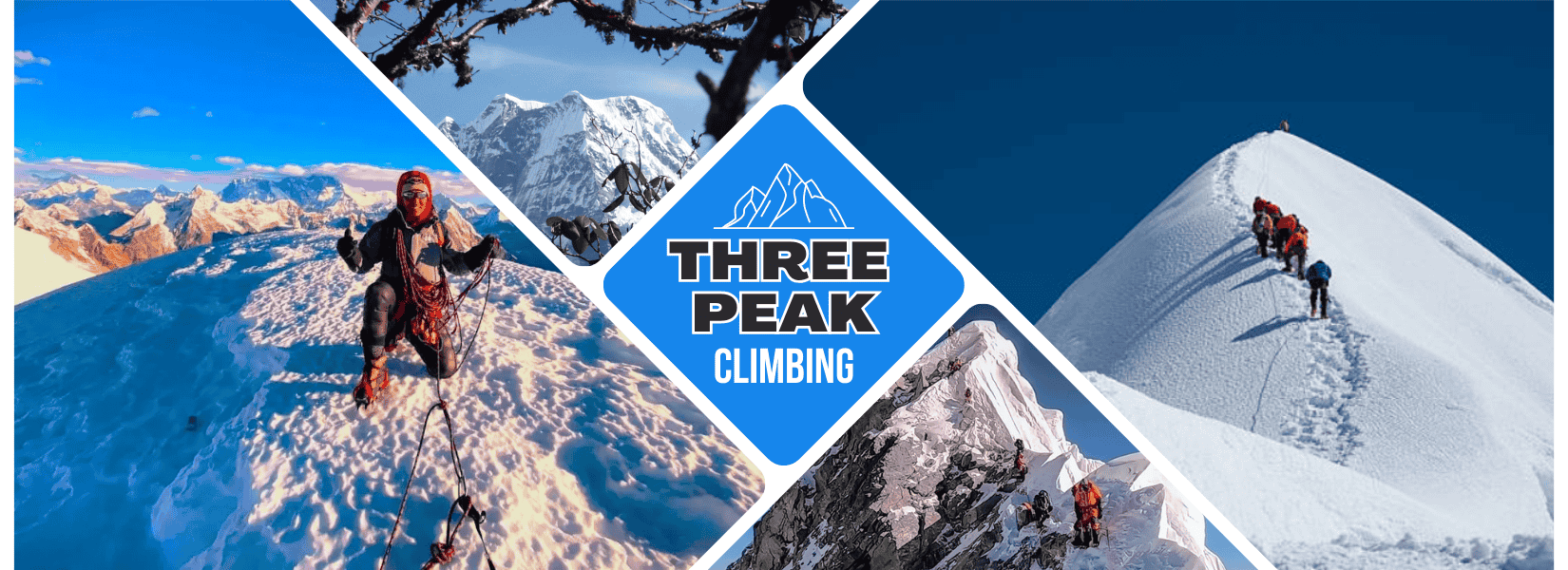
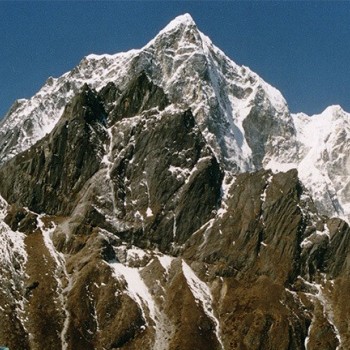
For those who find a single summit insufficient and a standard trek too tame, the Three Peak Climbing expedition in Nepal is the definitive answer. Spanning roughly 30 days, this journey conquers three of the Everest region’s most iconic "trekking peaks": Mera Peak (6,476m), Island Peak (6,189m), and Lobuche East (6,119m).
This is not just a climbing trip; it is a masterclass in high-altitude progression. Over the course of a month, you will transition from the lush Hinku Valley to the rugged Khumbu, moving from non-technical glacier walks to steep, exposed alpine ridges.
Why Choose a Three Peak Climbing?
Combining Mera, Island, and Lobuche into a single 30-day itinerary is a strategic and rewarding choice for any aspiring mountaineer.
The Ultimate Acclimatization: Starting with Mera Peak—the highest but technically easiest—builds your red blood cell count perfectly for the more technical challenges of Island and Lobuche.
Cost & Time Efficiency: Organizing three separate expeditions would cost nearly double in domestic flights, logistics, and permit overheads. A "combo" trip maximizes your time in the "death zone" (above 6,000m) while minimizing administrative waste.
Skill Progression: You start as a trekker on Mera, learn fixed-rope techniques on Island Peak, and finish as a true alpinist on the exposed ridges of Lobuche East.
Mental Fortitude: A 30-day expedition tests your grit. Completing the "Himalayan Trilogy" earns you a level of respect that a single-peak climber simply hasn't yet forged.
Overview of the Three Peaks Climbing
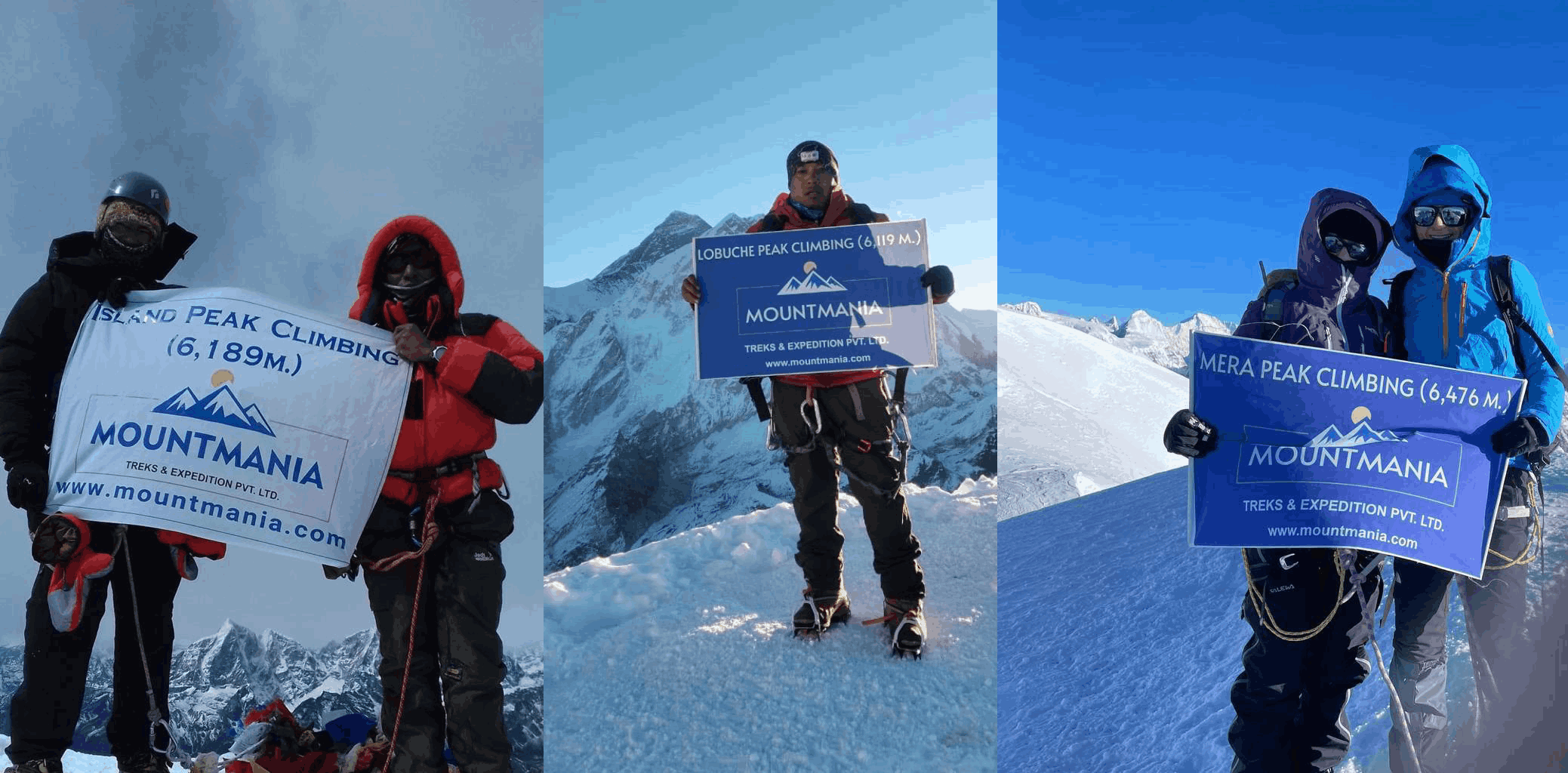
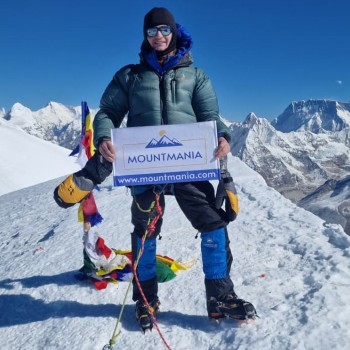
Mera is the highest trekking peak in Nepal. While it requires immense stamina, it is technically straightforward, primarily involving glacier walking. The summit offers perhaps the best panorama in the world, with five 8,000m giants visible: Everest, Lhotse, Cho Oyu, Makalu, and Kanchenjunga.
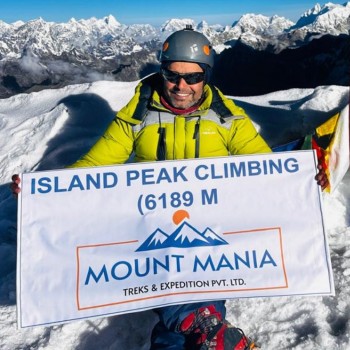
Also known as Imja Tse, Island Peak is where the "climbing" truly begins. You will navigate a glacier with crevasses (often using ladders) and tackle a steep 100m headwall of ice and snow using fixed ropes and a Jumar (ascender).
Often considered the most technical of the three, Lobuche East features steep rock slabs and a knife-edge snow ridge leading to the summit. It is the perfect training ground for those eyeing 7,000m or 8,000m expeditions in the future.
30-Day Three Peak Climbing Itinerary
| Phase | Days | Highlights |
| Preparation | 1–3 | Arrival in Kathmandu, permit briefing, and flight to Lukla. |
| Mera Peak Push | 4–13 | Trek through Hinku Valley, acclimatization in Khare, and Summit of Mera (6,476m). |
| The High Pass | 14–17 | Crossing the technical Amphu Labsta Pass (5,845m). |
| Island Peak Push | 18–21 | Trek to Chhukung and Summit of Island Peak (6,189m). |
| Lobuche East Push | 22–26 | Final Summit of Lobuche East (6,119m). |
| The Return | 27–30 | Trek back to Lukla and flight to Kathmandu. |
Difficulty Level & Required Experience
This expedition is graded as Challenging/Technical.
Suitability: This is for experienced trekkers who have previously reached 5,000m (e.g., Everest Base Camp or Kilimanjaro) and want to break into true mountaineering.
Technical Skills: You should be familiar with (or ready to learn) using crampons, an ice axe, a harness, and a Jumar.
Fitness: Expect to hike 6–9 hours a daily with a 10kg–15kg pack. Your "Summit Days" can last up to 15 hours.
Best Season for Three Peak Climbing
There are two primary windows for this expedition:
Spring (March – May): The most popular choice. The weather is warming up, and the snow is more stable. This is when Everest climbers are active, giving the region a vibrant "expedition" energy.
Autumn (September – November): Offers the crispest, clearest views and stable high-pressure systems. It is colder than spring, but the visibility is unmatched for photography.
Training & Preparation Tips
Physical Conditioning
Focus on weighted stair climbing and zone 2 cardio (long, slow runs). You need "legs of steel" for the descents and "lungs of leather" for the 6,000m air.
Technical Proficiency
If possible, take a basic mountaineering course before you leave. Learning how to self-arrest with an ice axe and how to rappel (abseil) will give you a massive confidence boost on Island and Lobuche.
Mental Preparation
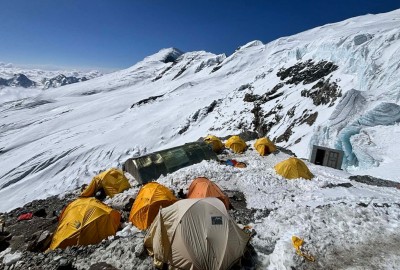
Thirty days in a tent or basic teahouse is taxing. Practice "patience as a skill." There will be weather delays; your ability to stay calm and focused during "rest days" is what gets you to the top.
Gear List
This gear list is curated for the specific 30-day duration of the Mera, Island, and Lobuche trilogy. Because you are out for a full month across multiple climate zones, your packing strategy must balance extreme warmth with technical mobility.
Technical Climbing Gear
These are your "life-support" tools for the three summits and the technical Amphu Labsta Pass.
Climbing Helmet: UIAA-approved; must fit over a thick beanie.
Harness: Lightweight, adjustable alpine harness (must fit over bulky down layers).
Ice Axe: General mountaineering axe (55–70cm depending on your height).
Crampons: 12-point steel crampons (semi-automatic or automatic, matching your boots).
Ascender (Jumar): One large handle (usually right-handed) with a locking carabiner.
Descender: Figure-8 or ATC-Guide.
Carabiners: 3x Locking (HMS/Screwgate) and 3x Non-locking.
Prusik Loops/Slings: 2x 6mm prusik cords and 2x 120cm sewn slings.
Footwear & Legwear
Your feet are your most important asset. For a 30-day trip, "Double Boots" are mandatory for warmth and drying capacity.
Double Mountaineering Boots: Essential for -20°C. Recommended 2026 models: La Sportiva G2 Evo or Scarpa Phantom 6000 HD.
Trekking Boots: Waterproof, high-ankle support for the 20+ days of trekking approach.
Camp Shoes: Down booties or insulated slippers for teahouses and high camps.
Socks:
3x Liner socks (moisture-wicking).
4x Mid-weight merino wool trekking socks.
2x Heavyweight "Summit" socks (thick wool/synthetic blend).
Gaiters: Heavy-duty, waterproof (unless your double boots have integrated gaiters).
The Layering System (Upper & Lower Body)
Temperature will swing from +25°C in the valleys to -25°C on the summits.
Base Layers: 2x Lightweight and 1x Expedition-weight merino wool tops/bottoms.
Mid-Layer Insulation: A high-loft fleece or "active" synthetic jacket (e.g., Patagonia Nano-Air).
Softshell Pants: Wind-resistant and stretchy for technical climbing days.
Hardshell Layer: Gore-Tex jacket and pants (with full side zips to put on over crampons).
Down Parka: Expedition-grade with a hood (800+ fill power). This is for summit nights and high-camp evenings.
Gloves:
Sleeping & Carry Gear
Sleeping Bag: Rated to -20°C (0°F) minimum. Down is preferred for compressibility.
Sleeping Bag Liner: Silk or fleece (adds ~5°C and keeps the bag clean).
Backpacks:
Sleeping Pad: Most agencies provide one, but a Therm-a-Rest NeoAir adds critical R-value insulation from the frozen ground.
Vision, Electronics & Hygiene
Glacier Glasses: Category 4 lenses with side shields (Essential to prevent snow blindness).
Ski Goggles: With low-light (amber/rose) lenses for windy summit pushes.
Headlamp: High-lumen (e.g., Black Diamond or Petzl) with 2x sets of spare lithium batteries (alkaline dies in the cold).
Power Bank: 20,000mAh+ (keep it inside your sleeping bag at night).
Water Treatment: 2x 1L Nalgene bottles (Wide mouth to prevent freezing) + Katadyn BeFree or purification tablets.
Required Permits
You cannot (and should not) attempt this solo. For the 2026 season, the legal requirements include:
NMA Climbing Permits: Specific permits for Mera, Island, and Lobuche.
National Park Fees: Sagarmatha National Park and Makalu Barun National Park entry.
Local Permits: Khumbu Pasang Lhamu Rural Municipality permit.
Safety Protocols: Ensure your guide has extensive NMA training. Your expedition must carry a comprehensive first aid kit, pulse oximeters, and have a clear satellite communication plan for helicopter evacuations if necessary.
Conclusion: Are You Ready for the Trilogy?
The Three Peak Climbing expedition is the gold standard for high-altitude adventure in Nepal. It offers a rare blend of remote wilderness in the Hinku Valley and the legendary prestige of the Everest region. If you have the fitness, the focus, and 30 days to give to the mountains, this trip will change your life.