
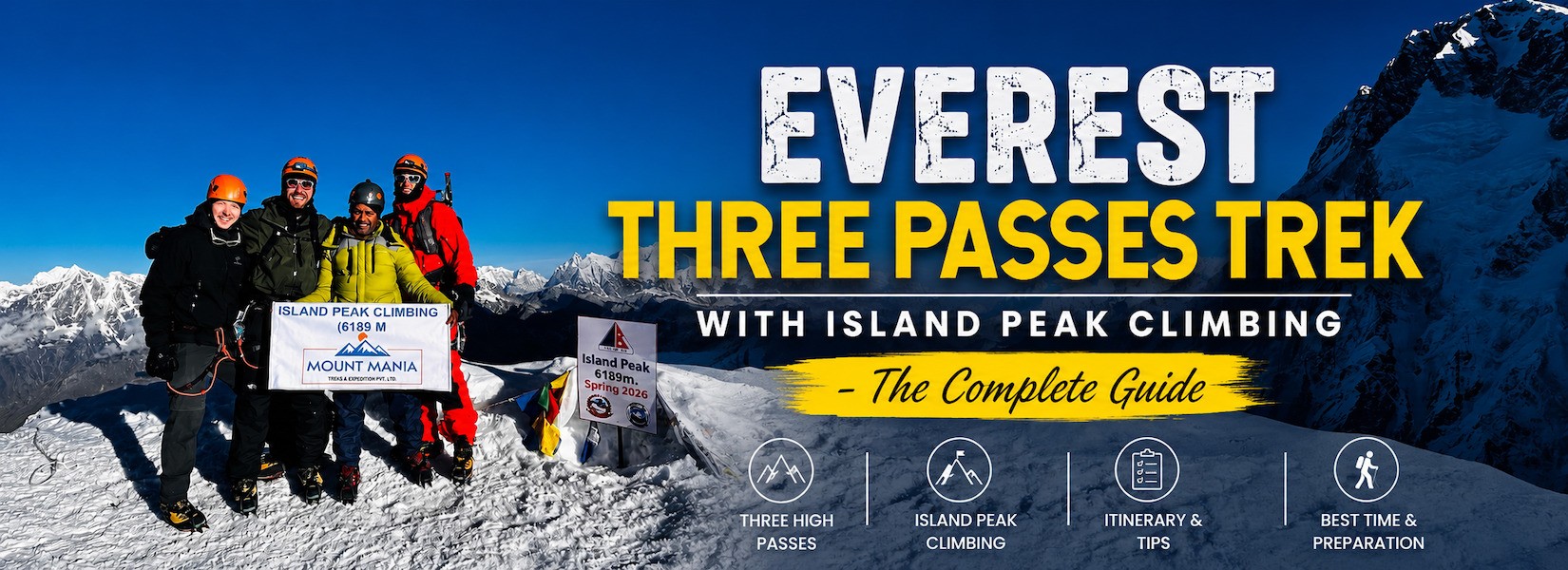
The Everest Three Passes Trek combined with an Island Peak climb is the single most complete high-altitude adventure in the Khumbu region. In one journey, you cross all three major passes — Kongma La, Cho La, and Renjo La — stand at Everest Base Camp, catch sunrise from Kala Patthar and Gokyo Ri, and finish with a genuine 6,189m mountaineering summit on Island Peak.
Table of Contents
Plan your trip to Nepal
Customize your trip with help from a local travel specialist.
This guide brings every part of that journey together: what each landmark involves, how the route is sequenced, what it takes to prepare, and everything else you need to plan the trip.
Why Combine Three Passes with Island Peak?
Most trekkers do Everest Base Camp as a standalone trip. Some attempt Island Peak on its own with a short approach. Combining the Three Passes circuit with Island Peak does something different: it turns the trek itself into deliberate preparation for the climb.
Each pass and viewpoint is sequenced to build altitude tolerance and technical familiarity gradually, so that by the time you reach Island Peak Base Camp, you're not attempting your first real mountaineering challenge cold — you're finishing a process you've been building toward for two weeks.
A typical combined itinerary runs 19–21 days and follows this general sequence:
1. Lukla to Namche Bazaar — acclimatization and general fitness building
2. Namche to Renjo La to Gokyo Valley — first high pass and the Gokyo Lakes
3. Gokyo to Cho La Pass to Dzongla — the technical glacier crossing
4. Dzongla to Everest Base Camp via Gorak Shep — the trek's symbolic centerpiece
5. Kala Patthar sunrise, then descent toward Chukung — the classic viewpoint climb
6. Chukung to Kongma La to Lobuche/Chukung — the toughest and final pass
7. Chukung Ri acclimatization hike — final altitude test before the climb
8. Island Peak Base Camp to Summit — the technical climax of the trip
9. Descent to Lukla — return via Pangboche and Namche
The order matters. Passes and peaks are arranged from easiest to hardest, with Island Peak scheduled only after climbers have proven their acclimatization across multiple 5,300m+ crossings.
Renjo La Pass
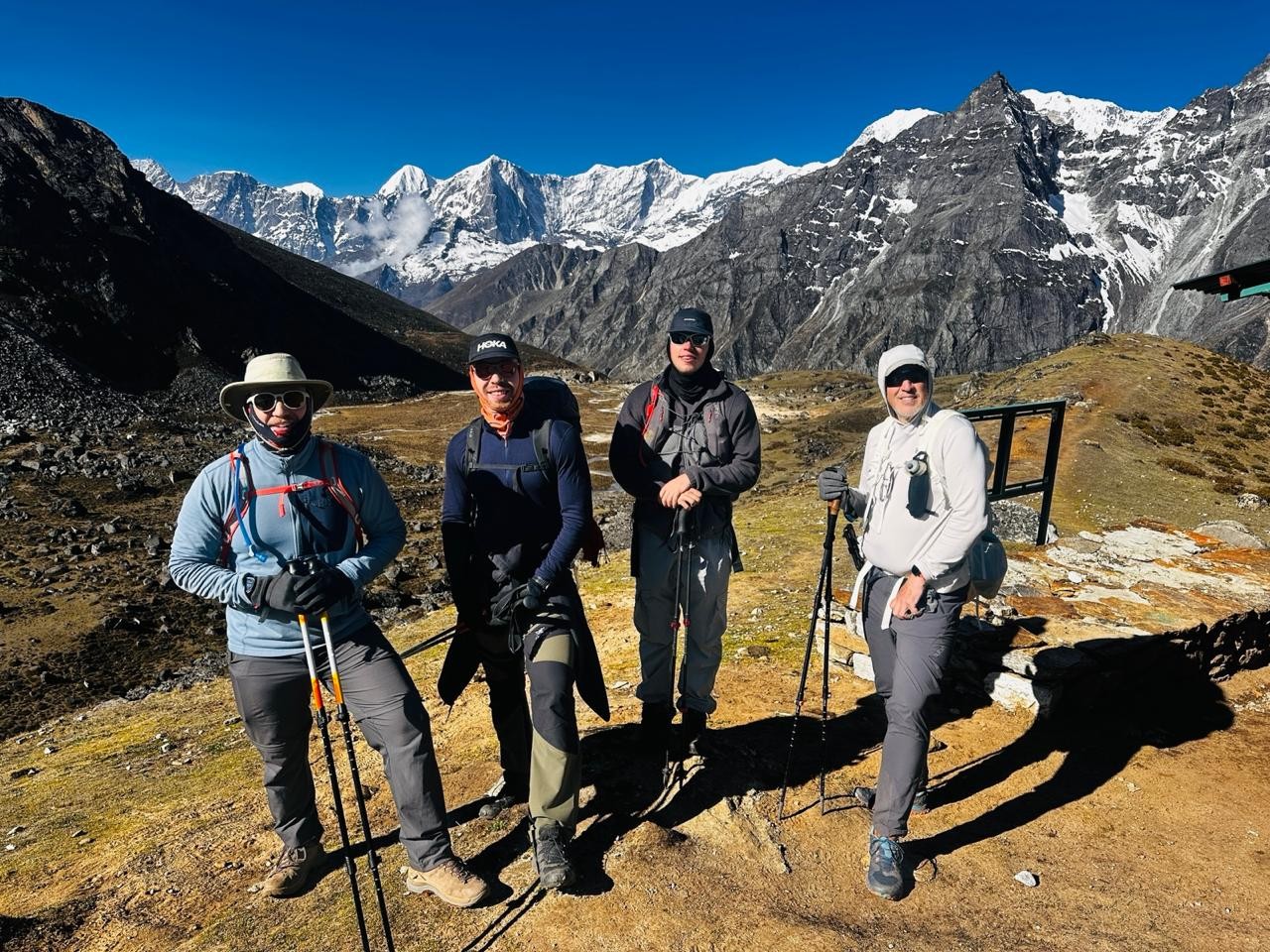
Elevation: 5,360m
Often considered the most scenic and least crowded of the three passes, Renjo La connects the Bhote Koshi Valley near Thame with the Gokyo Valley. The ascent is steady rather than technical, climbing over stone steps and a rocky trail to a pass marked by chortens and prayer flags.
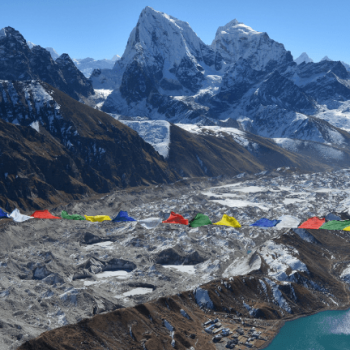
What sets Renjo La apart is its view: from the top, trekkers get an uninterrupted panorama that includes Mount Everest, Lhotse, Makalu, Cho Oyu, and the string of Gokyo Lakes glittering turquoise far below. Many guides consider this the single best viewpoint in the entire Everest region, rivaling — and arguably surpassing — the more famous vantage points at Kala Patthar.
Gokyo Ri
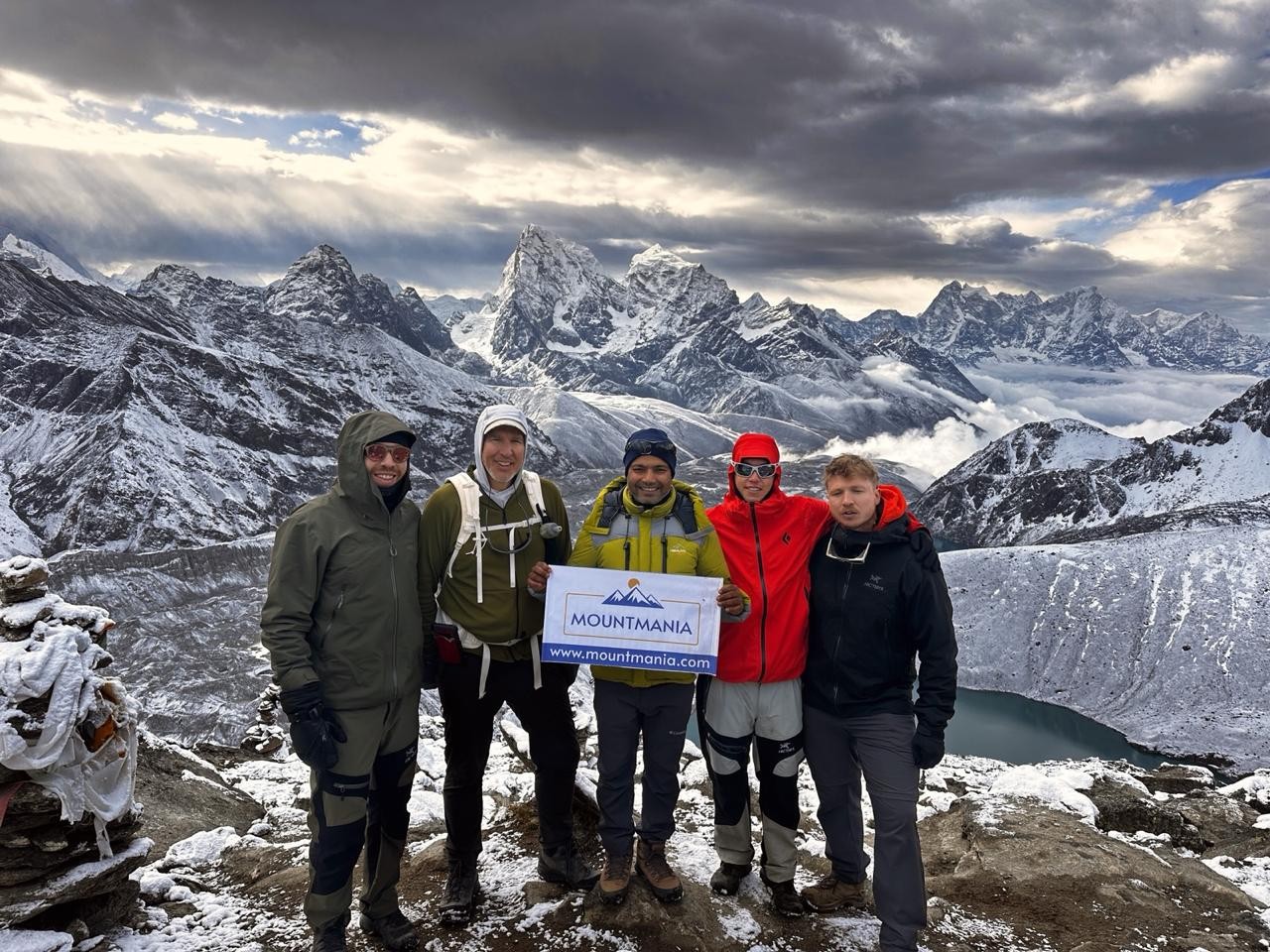
Elevation: 5,357m
Gokyo Ri rises above the turquoise Gokyo Lakes, one of the highest freshwater lake systems in the world, and offers what many consider the finest panoramic view in the Khumbu — a full sweep of four 8,000m peaks: Everest, Lhotse, Makalu, and Cho Oyu, all visible from a single summit.
The climb from Gokyo village is steep but short, typically done at dawn to catch the sunrise illuminating the Everest massif. Below, the glacial lakes and the vast Ngozumpa Glacier — Nepal's longest — create a striking contrast of blue water, white ice, and grey moraine. Gokyo Ri is often considered a quieter, equally spectacular alternative to Kala Patthar, drawing far fewer crowds despite its comparable views.
Cho La Pass
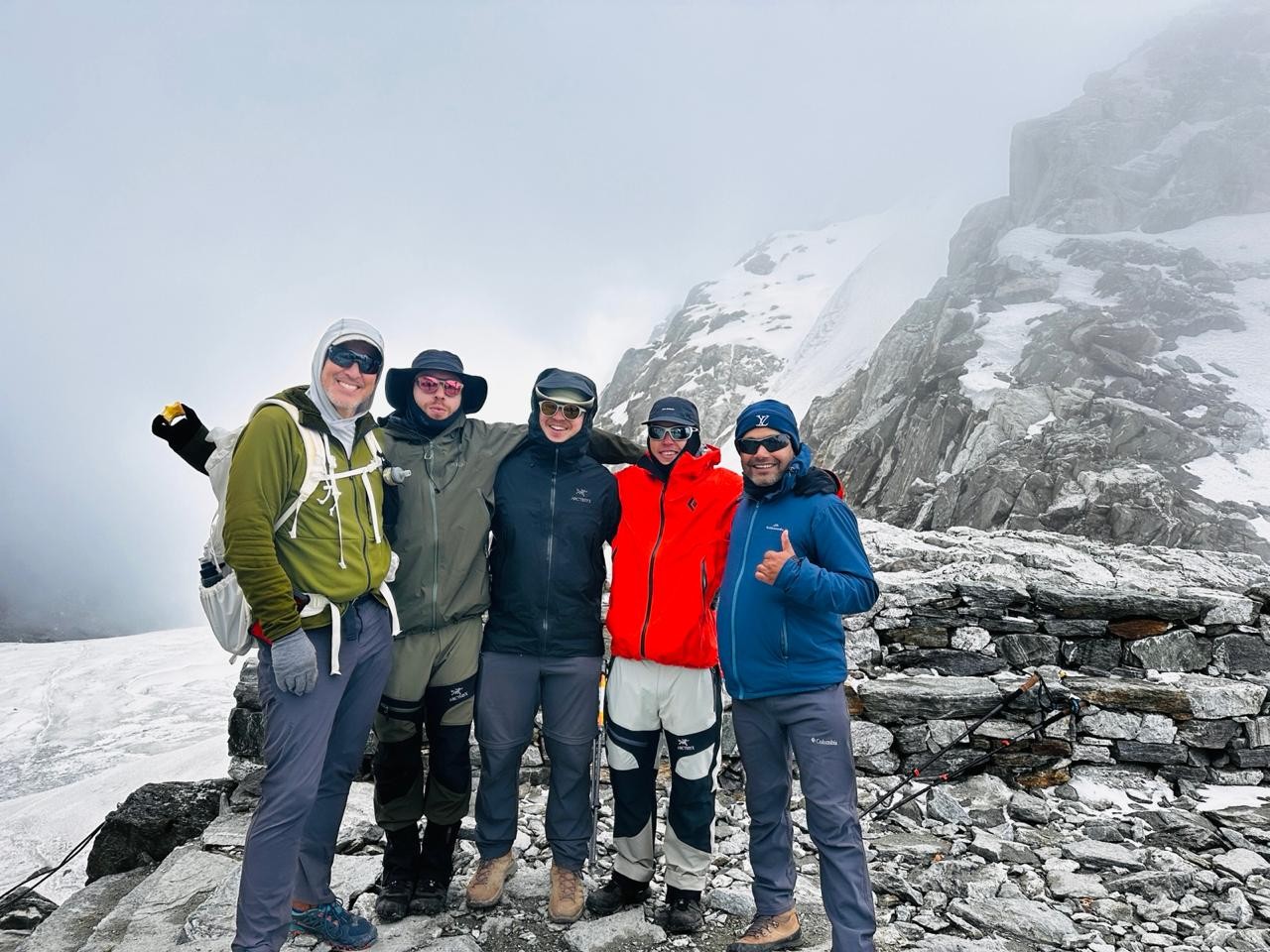
Elevation: 5,420m
Cho La Pass links the Gokyo Valley with the Everest Base Camp trail and is considered the most technical of the three passes. The route involves a steep, rocky ascent followed by a crossing of a glacier and snowfield, where crampons and occasionally fixed ropes are used depending on seasonal ice conditions.
The pass is a dramatic transition point — trekkers leave behind the turquoise lakes of Gokyo and arrive in the high, glacier-carved valleys leading toward Everest. Weather on Cho La can shift quickly, and an early morning crossing is standard practice to avoid afternoon winds and softening ice. For many trekkers, Cho La is their first real taste of technical mountain travel, serving as an informal rehearsal for climbers continuing on to Island Peak.
Everest Base Camp
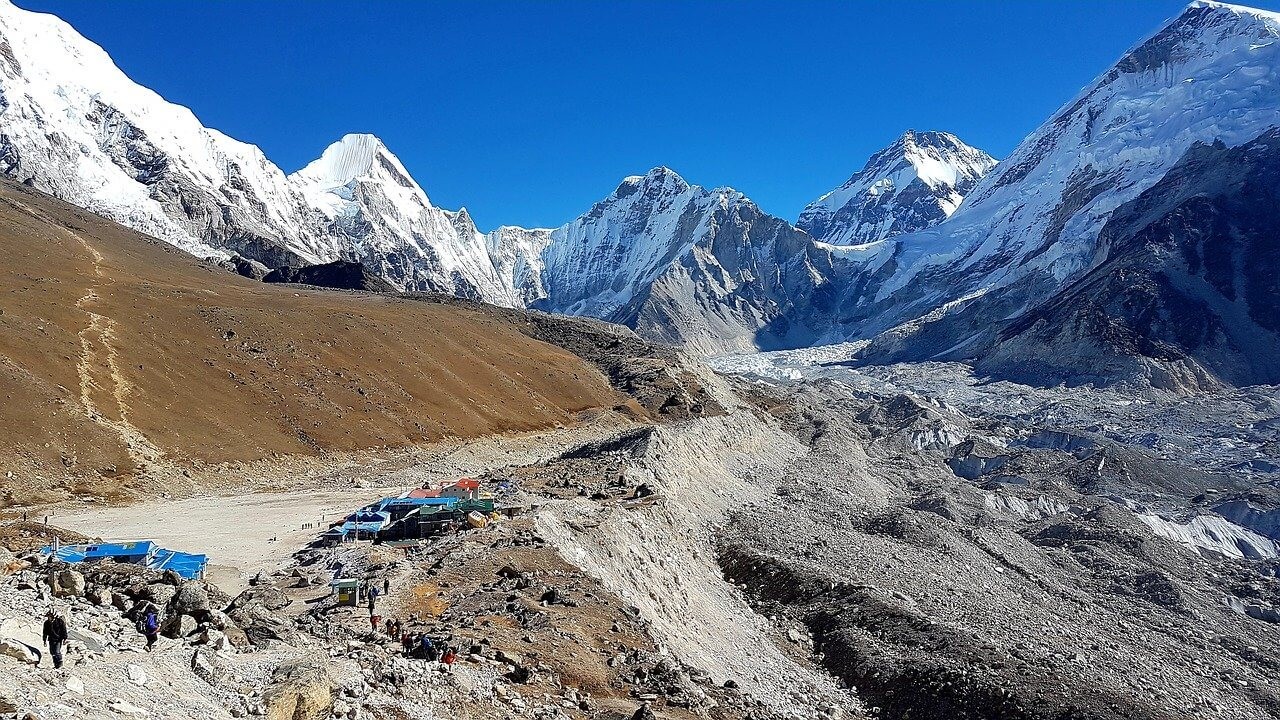
Elevation: 5,364m
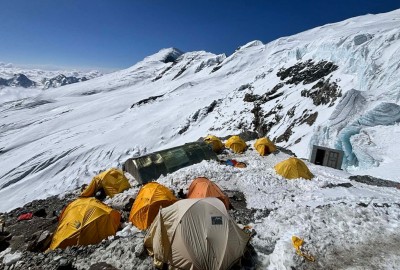
Everest Base Camp is the iconic staging point for climbers attempting the world's highest mountain, and for trekkers, it represents the ultimate milestone of the Khumbu region. The site itself sits on the Khumbu Glacier, surrounded by the jagged Khumbu Icefall, and during spring climbing season transforms into a temporary city of expedition tents.
Reaching EBC is less about a singular dramatic view of Everest — the summit is actually hidden from direct sight at Base Camp — and more about the achievement and atmosphere: standing at the foot of the mountain, surrounded by climbing history, prayer flags, and the raw, glacier-carved landscape of the Khumbu. The trek to Base Camp passes through Sherpa villages, ancient monasteries, and increasingly dramatic mountain scenery, making the journey as significant as the destination itself.
Kala Patthar
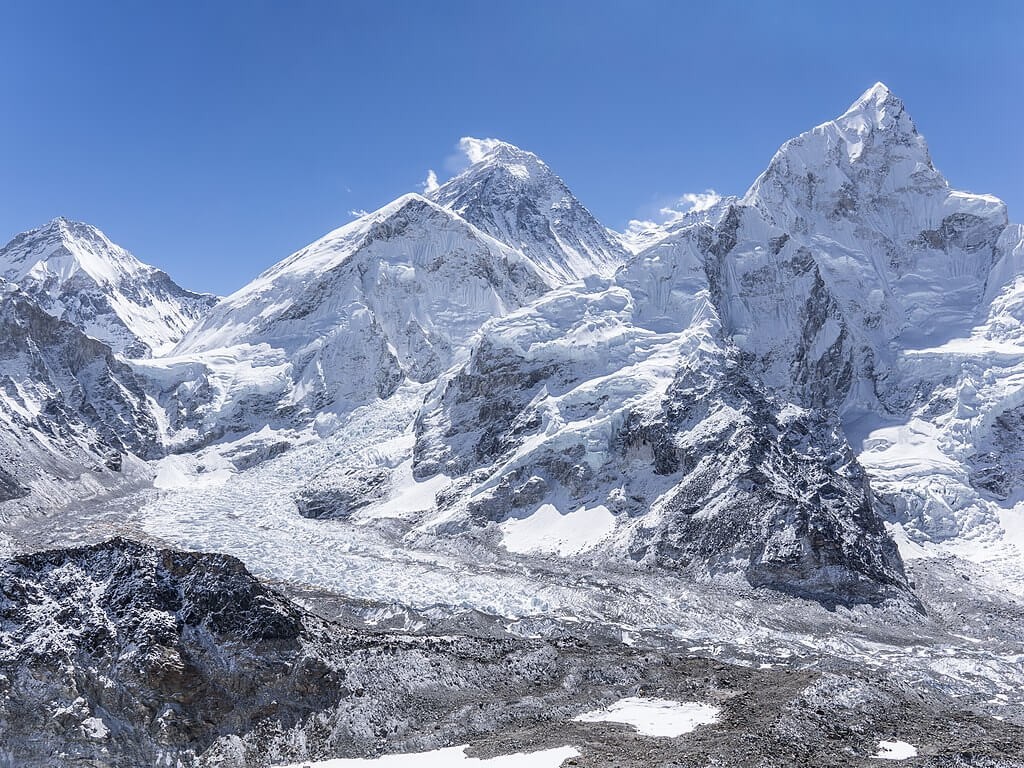
Elevation: 5,644m
Kala Patthar, meaning "black rock," is the most famous viewpoint in the Everest region and the spot most trekkers associate with the classic photograph of Mount Everest's summit pyramid. Unlike Base Camp, which sits too close to Everest to see its peak, Kala Patthar offers an unobstructed, close-range view of the summit alongside Nuptse and the Khumbu Icefall.
Most trekkers climb Kala Patthar before dawn, timing the ascent to catch first light hitting Everest's summit — a cold, steep, but short climb from Gorak Shep that rewards with one of the most celebrated mountain views on Earth. It's widely regarded as the true visual climax of the Everest Base Camp trek.
Kongma La Pass
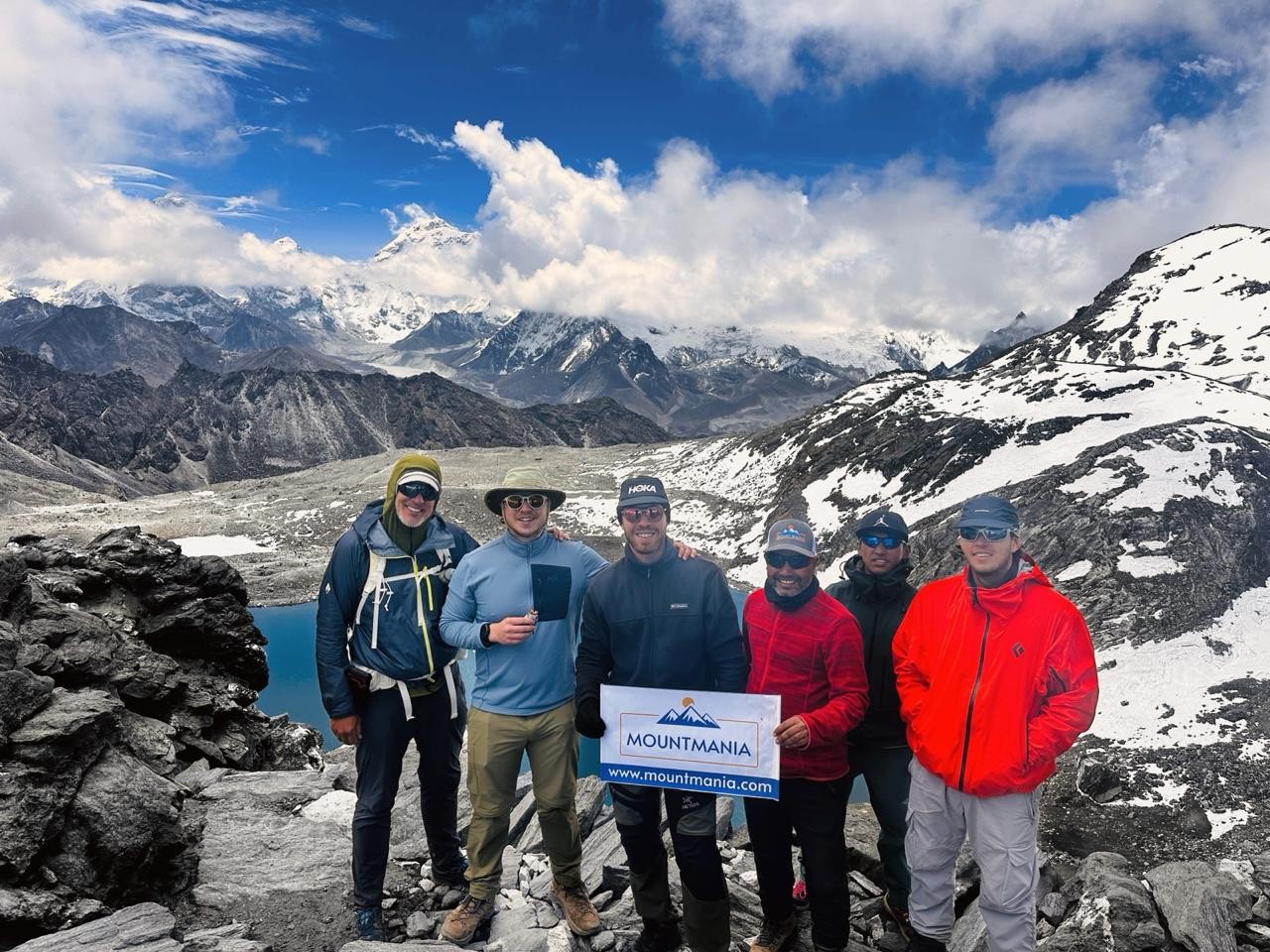
Elevation: 5,535m
Kongma La is the highest and most demanding of the three high passes in the Everest region, connecting the Chukung Valley with Lobuche. The trail climbs steeply over loose rock and moraine before reaching a ridge marked by prayer flags, then descends onto the Khumbu Glacier — a landscape of ice pinnacles, boulders, and glacial lakes.
Because of its altitude and the physically demanding terrain, Kongma La is typically the final and toughest pass tackled in the Three Passes circuit, often crossed only after climbers have already acclimatized through Renjo La and Cho La. The pass offers sweeping views of Ama Dablam, Makalu, and the Chukung Valley, along with a genuine sense of remoteness rarely found on the more heavily trafficked EBC trail.
Chukung Ri
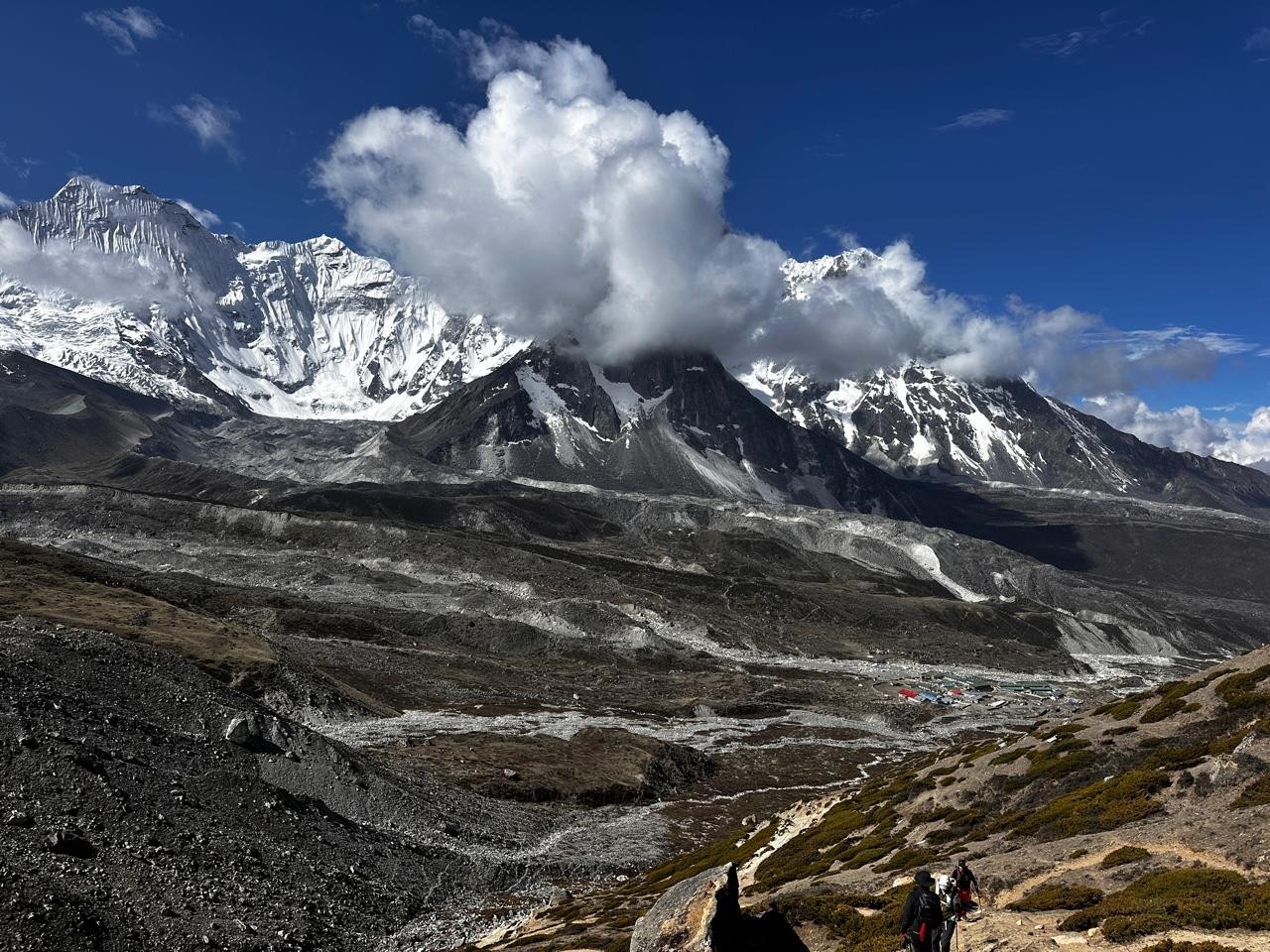
Elevation: 5,550m
Chukung Ri is a lesser-known but highly rewarding viewpoint above the small settlement of Chukung, often used as an acclimatization hike before attempting Island Peak or crossing Kongma La. The climb is a steady, non-technical ascent over rocky terrain, reaching a summit that offers dramatic close-up views of Lhotse's massive south face, Ama Dablam, Makalu, and the Imja Valley.
Because it sits at a similar elevation to Island Peak's High Camp, Chukung Ri serves a dual purpose: a spectacular standalone viewpoint and a practical altitude test for climbers preparing for their Island Peak summit push.
Island Peak (Imja Tse)
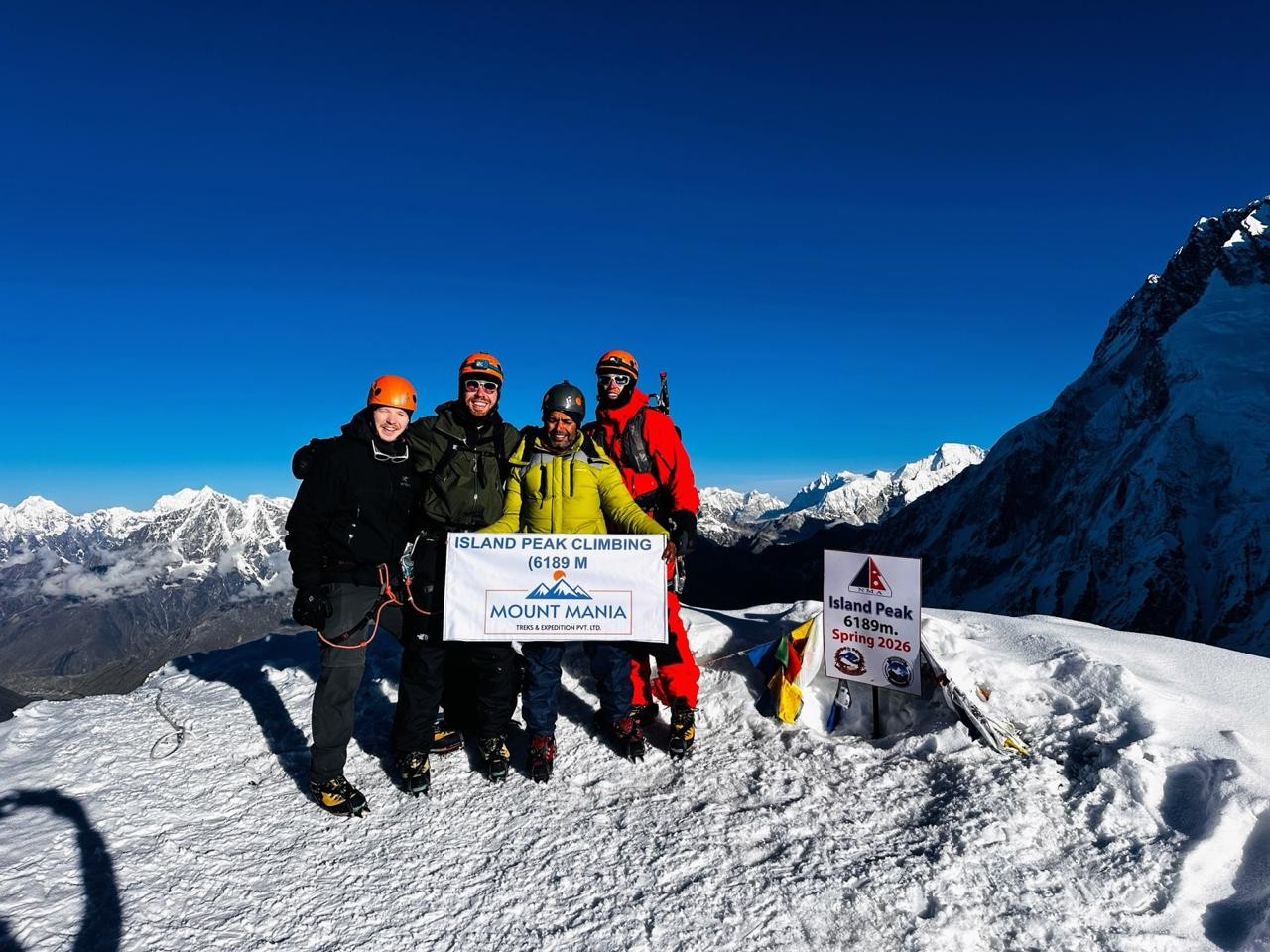
Elevation: 6,189m
Island Peak, known locally as Imja Tse, is one of the most popular trekking peaks in Nepal, prized for offering a genuine high-altitude mountaineering experience without the extreme technical demands of an 8,000m expedition. The peak earned its English name from early explorers who saw it rising like an island out of a sea of ice, surrounded by the Lhotse, Nuptse, and Ama Dablam massifs.
The climb begins from Island Peak Base Camp near Chukung, progressing through a rocky trail before reaching High Camp. Summit day involves crossing a glacier, navigating crevasses, and climbing a steep headwall of ice and snow at 45–55 degrees using fixed ropes and crampons. From the summit, climbers are rewarded with an extraordinary panorama of Lhotse's south face, Makalu, Baruntse, and Ama Dablam.
Island Peak requires basic mountaineering skills — crampon use, ice axe technique, and jumar (ascender) use on fixed lines — making it an ideal introduction to technical climbing for experienced trekkers ready to take the next step.
Difficulty and Who This Trek Is For?
This is a strenuous, technical itinerary — not suited to first-time trekkers. It's best suited to:
- Trekkers with prior high-altitude experience (EBC, Annapurna Circuit, or similar 4,500m+ treks)
- Those in strong cardiovascular condition, ideally with some hiking-specific training
- Climbers seeking a genuine mountaineering objective without committing to a full expedition-style peak
- Anyone wanting Everest Base Camp, Kala Patthar, Gokyo Ri, and a real summit in a single trip
Prior mountaineering experience is not required for Island Peak, but a realistic level of fitness and mental preparedness for cold, technical terrain is essential.
Best Time to Go
Spring (March–May) and Autumn (late September–November) are the two recommended windows:
Spring offers warming temperatures, generally stable weather, and coincides with Everest expedition season, adding atmosphere at Base Camp.
Autumn offers the clearest mountain visibility of the year, with crisp air and minimal precipitation, though nights are colder at altitude.
Winter crossings of the passes are possible for experienced parties but involve significantly harsher conditions, and monsoon season (June–August) brings poor visibility and higher avalanche/rockfall risk on the passes.
How to Prepare
Preparation for this itinerary works on three levels:
1. Physical — cardiovascular training, stair/hill climbing with a loaded pack, and multi-day hiking experience beforehand
2. Technical — basic familiarity with crampons and ice axe use is helpful, though guides provide instruction before the Island Peak summit push
3. Mental — experience with multi-day cold-weather trekking and comfort with early starts, discomfort, and delayed gratification
Permits and Costs
This route requires:
- Sagarmatha National Park Entry Permit
- Khumbu Pasang Lhamu Rural Municipality Permit
- Island Peak Climbing Permit
Costs vary based on group size, season, and whether the trip is fully guided/porter-supported. Island Peak climbing permits carry seasonal pricing tiers, with spring typically the highest cost bracket.
Packing List Essentials
Beyond standard trekking gear, this itinerary requires climbing-specific equipment:
- Crampons, harness, and ice axe (climbing gear is often included or rentable through your operator)
- Insulated mountaineering boots suitable for both trekking and the Island Peak summit push
- A four-season sleeping bag rated to at least -20°C
- Down jacket and insulated gloves for high camp and summit night
- Trekking poles for pass crossings and glacier approach sections
Frequently Asked Questions
Do I need climbing experience before attempting this trek?
No prior mountaineering experience is required, but strong fitness and high-altitude trekking experience are strongly recommended.
Which pass is the hardest?
Kongma La is generally considered the toughest due to its elevation and the physically demanding moraine terrain, though Cho La is the most technical due to the glacier crossing.
Can I do the Three Passes Trek without Island Peak?
Yes — the Three Passes circuit is a complete trek on its own. Island Peak is typically added as an extension for those wanting a technical summit.
How long does the combined trip take?
Most itineraries run 19–21 days including acclimatization days, though this can be adjusted based on pace and buffer days for weather.
Is Everest visible from all these viewpoints?
Everest is visible from Renjo La, Gokyo Ri, Kala Patthar, and the Island Peak summit, but not directly from Base Camp itself, where the summit is obscured by the surrounding ridgeline.
Planning your Three Passes and Island Peak journey? Mount Mania Treks & Expedition has guided climbers through this exact combined route for years, with itineraries built around proper acclimatization sequencing rather than rushed schedules.
Get in touch to start planning your trip.

Rupak Parajuli
Send an Enquiry
Plan your trip to Nepal
Customize your trip with help from a local travel specialist.