Useful Information
The Mount Mania All-Inclusive Advantage
Total Transparency: We design expeditions around quality infrastructure, premium safety protocols, and zero hidden costs.
Accommodations & Logistics
- Teahouse Lodging: 8 Nights in selected local teahouses featuring comfortable foam mattresses, warm pillows, and optimized private amenities where available.
- High-Alpine Camping: 3 Nights of specialized winter-proof dome tents at Base Camp and High Camp, supported by a full kitchen crew.
Premium Nutrition & Trail Care
- Three freshly prepared, nutrient-dense meals daily during the teahouse trek and camping stages.
- Continuous supply of safe, boiled drinking water, plus warm teas and coffees at camp.
- High-energy snacks (chocolate bars like Snickers, Mars, Bounty) provided directly on climbing days.
- Daily fresh, seasonal fruit servings to maintain optimal immunity.
Safety, Staffing & Gear Ratios
- Elite Leadership: 1 Expert Sherpa Climbing Guide for every 1–2 climbers (Scaling up to 2 Guides for 3–5 climbers; 3 Guides for 6–8 climbers).
- Porterage & Staff Care: 1 Dedicated luggage porter for every 2 clients, along with a full team of specialized high-altitude camping porters. Full wages, meals, medical care, and robust rescue insurance are completely covered for all local staff.
- Safety Equipment: Supplementary oxygen cylinders paired with mask regulators (or Gamow bag), digital pulse oximeters for daily oxygen saturation checks, and a comprehensive medical trauma kit.
- Logistical Backing: Cell Phone for absolute remote emergency coordination.
- Technical Gear Inclusions: Full group climbing assets (high-grade dynamic climbing ropes, ice screws, snow bars, ice hammers). Premium personal equipment is also fully provisioned, including technical mountaineering boots, crampons, safety helmets, climbing harnesses, ice axes, screwgate carabiners, descenders (Figure 8/Belay devices), jumars (ascenders), prussic loops, and tape slings.
Legalities, Permits & Takeaways
- Official Naya Kanga Peak Climbing Permit and Langtang National Park entry clearances.
- TIMS (Trekkers' Information Management System) certification.
- Official Naya Kanga Peak Climbing Certificate issued by the Nepal Mountaineering Association (NMA) upon a successful ascent.
- A heavy-duty, weather-resistant Mount Mania 85L Duffel Bag and detailed topographic trekking map.
The Tactical High-Altitude Packing Checklist
To maximize efficiency, your gear should be split into a Daypack (40-50L) that stays with you on the trail, and a Duffel Bag handled by our dedicated porter team.
Layering & Apparel
- Core Base: 3 Technical lightweight thermal tops, 2 thermal base-layer bottoms (merino wool or Polartec).
- Mid-Layer: 3 Moisture-wicking trekking shirts, 1 heavy fleece jacket/pullover, 2 pairs of durable trekking pants (convertible zip-offs are ideal).
- Outer Insulation: 1 Waterproof, windproof breathable shell jacket with hood, 1 heavy-weight insulated down jacket, 1 pair of waterproof rain pants.
- Extremities: Warm beanie hat, UV-protective polarized sunglasses, tubular neck buff, lightweight liner gloves, and heavy-duty Gore-Tex waterproof outer climbing gloves.
Footwear & Socks
- Sturdy, waterproof, ankle-supportive trekking boots (broken-in prior to trip).
- Camp footwear (lightweight trainers or trail runners for teahouse use).
- 3 Pairs of technical smart-wool trekking socks, 3 pairs of ultra-thin liner socks, and 2 pairs of thick wool socks strictly reserved for sleeping.
Field Electronics & Accessories
- Compact headlamp with fresh spare batteries.
- Two 1-liter heavy-duty water bottles (insulated sleeves highly recommended).
- Season-rated sleeping bag (Comfort rated down to -15°C) along with a clean thermal liner.
- Adjustable, shock-absorbing trekking poles.
- Portable solar bank/charger and high-capacity extra batteries for cameras.
- Personal hygiene kit (including hand sanitizer, zinc tape, blister patches, water purification drops, and personal medications like Diamox).
FAQs
1. Where is Yala Peak located?
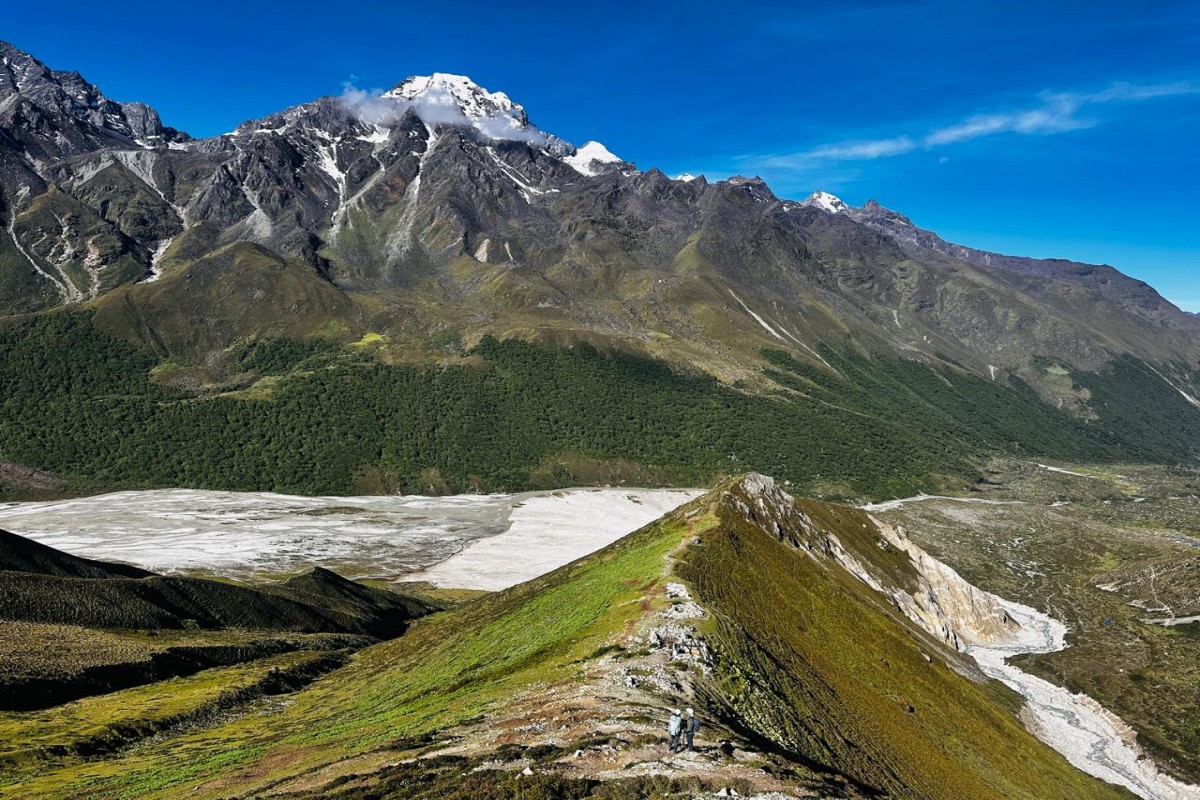
Yala Peak is located in the Langtang region of Nepal, north of Kathmandu, close to the Tibetan border.
2. How high is Yala Peak?
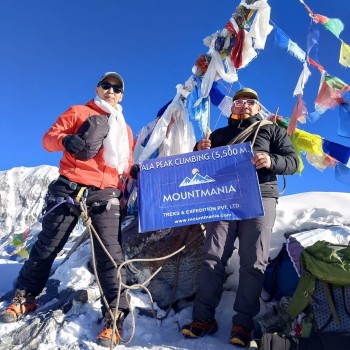
Yala Peak stands at 5,520 meters (18110.24 feet) above sea level.
3. Is Yala Peak considered a trekking peak?
Yes, Yala Peak is classified as a trekking peak, ideal for beginners entering mountaineering.
4. Do I need prior climbing experience for Yala Peak?
No technical climbing experience is required, but good fitness and basic hiking experience are recommended.
5. How difficult is Yala Peak climbing?
The difficulty level is easy to moderate, mainly affected by altitude and weather conditions.
6. What is the success rate of Yala Peak climbing?
Yala Peak has a high success rate (around 90–99%), depending on weather, acclimatization, and individual fitness.
7. What is the best season to climb Yala Peak?
The best seasons are spring (March–May) and autumn (September–November).
8. Can Yala Peak be climbed in winter?
Yes, but winter climbs are more challenging due to cold temperatures and snow.
9. Is monsoon season suitable for Yala Peak?
Monsoon (June–August) is not recommended due to rain, clouds, and slippery trails.
10. How long does the Yala Peak climbing trip take?
The trip usually takes 10–12 days, starting and ending in Kathmandu.
11. What permits are required for Yala Peak climbing?
- Langtang National Park Permit
- TIMS Card
- Yala Peak climbing permit (if required by operator)
12. Do I need a guide for Yala Peak?
Yes, climbing with a licensed guide is strongly recommended for safety and success.
13. What is the starting point of the trek?
The trek usually starts from Syabrubesi, about 7–8 hours’ drive from Kathmandu.
14. Where is the base camp of Yala Peak?
Yala Peak Base Camp is located near Kyangjin Gompa at around 4,800 meters.
15. What kind of accommodation is available?
Tea houses during the trek and Tents at base camp (depending on itinerary)
16. What meals are provided during the climb?
Meals include local Nepali food and basic international dishes like dal bhat, noodles, pasta, soup, and rice.
17. Is altitude sickness a concern?
Yes, altitude sickness is possible. Proper acclimatization and hydration are essential.
18. What is the maximum altitude reached?
The highest point is the summit of Yala Peak at 5,732 m.
19. What mountains can be seen from Yala Peak summit?
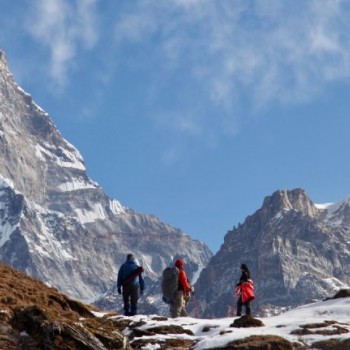
You can see Langtang Lirung, Dorje Lakpa, Ganesh Himal, Shishapangma (Tibet) and surrounding peaks.
20. What equipment is required for Yala Peak climbing?
Basic mountaineering gear such as:
Crampons
Ice axe
Harness
Helmet
Warm clothing
21. Can equipment be rented in Kathmandu?
Yes, most climbing gear can be rented or purchased in Kathmandu.
22. How cold does it get during the climb?
Temperatures can drop to -10°C to -20°C at night, especially near the summit.
23. Is travel insurance required?
Yes, travel insurance covering high-altitude climbing and emergency evacuation is mandatory.
24. Is Yala Peak suitable for beginners?
Yes, Yala Peak is one of the best beginner-friendly peaks in Nepal.
25. What is the group size for Yala Peak climbing?
Group size usually ranges from 2 to 12 climbers.
26. Are porters available?
Yes, porters and assistant guides are available and commonly used.
27. How fit do I need to be?
You should be able to walk 5–7 hours per day and have good cardiovascular fitness.
28. Can Yala Peak be combined with Langtang Valley Trek?
Yes, Yala Peak is commonly combined with the Langtang Valley and Kyangjin Gompa trek.
29. Is oxygen used for Yala Peak climbing?
No, supplemental oxygen is not required.
30. Why choose Yala Peak over other trekking peaks?
Yala Peak offers:
- High success summit rate
- Stunning Himalayan views
- Lower technical difficulty
- Short itinerary
- Cultural experience in Langtang Valley